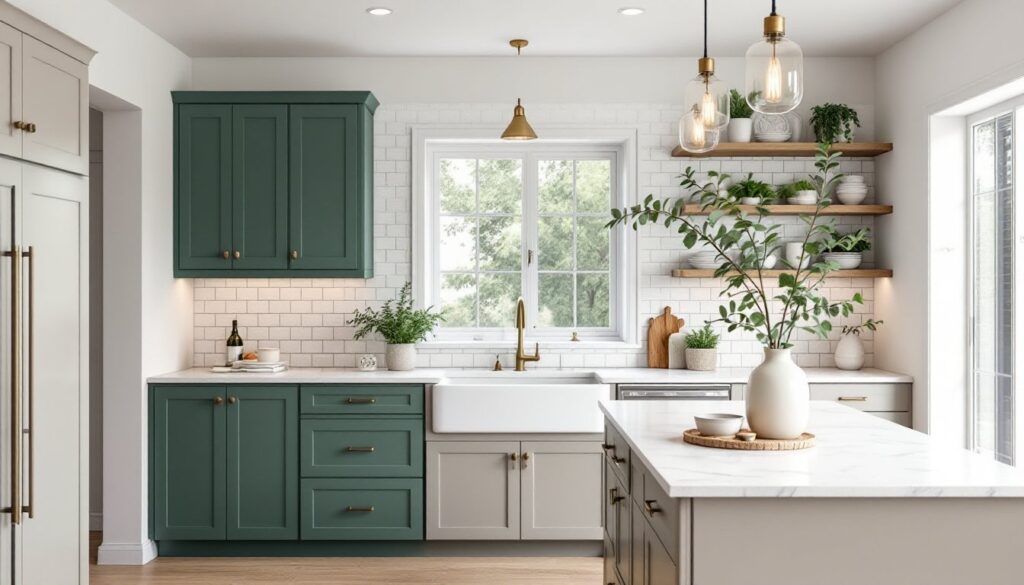

Kitchen cabinets aren’t just storage, they’re the largest visual element in most kitchens, setting the tone for the entire space. In 2025, homeowners are moving away from the stark whites and cool grays that dominated the past decade, embracing warmer, more grounded palettes that feel both current and timeless. Whether someone’s planning a full remodel or a budget-friendly refresh with paint, understanding this year’s color trends helps them make choices they won’t regret in two years. This guide covers the kitchen cabinet colors 2025 is bringing to the forefront, along with practical advice for choosing and applying them successfully.
Table of Contents
ToggleKey Takeaways
- The top kitchen cabinet colors 2025 trends emphasize warm neutrals like greige, soft taupe, and creamy off-whites, moving away from stark whites and cool grays for a more inviting aesthetic.
- Dark, saturated cabinet colors such as forest green, charcoal, and navy create drama and sophistication when paired with light countertops and adequate lighting to prevent a dim appearance.
- Cabinet color should align with your kitchen’s style and fixed elements like flooring and countertops; test samples in actual lighting conditions since north- and south-facing kitchens can dramatically affect how colors appear.
- DIY cabinet painting requires proper prep work including deglossing, sanding, priming, and multiple thin coats; skip any step and adhesion and durability suffer significantly.
- Painting a kitchen island in a bold color offers a lower-risk way to test trendy cabinet colors while maintaining flexibility, creating visual interest without overwhelming the entire space.
- Professional cabinet painting costs $3,000–$8,000 compared to $15,000–$40,000+ for new cabinets, making it the most cost-effective kitchen transformation when prep work is done correctly.
Why Kitchen Cabinet Color Matters in 2025
Cabinet color directly impacts a kitchen’s perceived size, brightness, and style cohesion. In 2025, the shift reflects broader design movements toward sustainability and wellness, colors that feel organic, less sterile, and more connected to natural materials.
Darker cabinets can anchor a space and hide wear better than white, but they require adequate lighting to avoid feeling cave-like. Lighter, warmer tones reflect light without the clinical edge of pure white, making kitchens feel inviting rather than institutional. The right color also affects resale value: while personal taste varies, overly trendy choices (think millennial pink or electric teal) can narrow a buyer pool, whereas sophisticated neutrals and nature-inspired hues tend to have broader appeal.
From a practical standpoint, cabinet color influences maintenance. High-gloss finishes show fingerprints and scratches more than matte or satin sheens. Lighter colors may require more frequent cleaning in high-traffic kitchens, but they’re more forgiving with touch-ups. Paint technology has improved significantly, cabinet-specific paints with built-in primers now offer excellent adhesion and durability, making DIY repaints more viable than ever for homeowners willing to prep correctly.
Top Kitchen Cabinet Color Trends for 2025
Warm Neutrals and Earthy Tones
The biggest shift in kitchen cabinet colors 2025 is the embrace of warm neutrals, think greige (a gray-beige hybrid), soft taupe, warm mushroom, and creamy off-whites with yellow or beige undertones. These colors pair beautifully with natural wood flooring, stone countertops, and brass or aged bronze hardware.
Specific shades gaining traction:
- Accessible Beige and similar greiges that read neutral in most lighting
- Soft linen whites (not stark builder white, those are out)
- Clay and terracotta-inspired tans, especially for lower cabinets paired with lighter uppers
These tones work across kitchen styles. In a modern farmhouse, a warm greige feels less dated than gray alone. In a contemporary kitchen, soft taupe cabinets add warmth without sacrificing clean lines. The beauty of warm neutrals is their flexibility: they don’t compete with colorful backsplash tile or bold countertops, and they age gracefully as trends shift.
Earthy tones also support biophilic design principles, bringing natural elements indoors to improve well-being. Pairing these cabinet colors with live-edge wood shelving, stone accents, or large windows reinforces that connection. For DIYers painting existing cabinets, test samples in the actual kitchen lighting: warm neutrals can shift dramatically between north- and south-facing rooms.
Bold and Dramatic Dark Hues
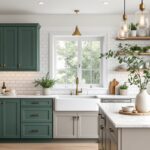
On the opposite end, deep, saturated darks are having a moment. These aren’t the stark blacks of industrial kitchens but richer, more complex tones: charcoal with green undertones, deep navy, forest green, and even near-black chocolate browns. These colors make a statement and pair exceptionally well with light countertops (white quartz, marble, or butcher block) and gold or brass fixtures.
Many interior design trends now feature two-toned kitchens, dark lowers, light uppers, which balances drama with functionality. Dark lower cabinets ground the space and are more practical in homes with kids or pets, as they hide scuffs and spills better than white.
Key considerations for dark cabinets:
- Lighting is non-negotiable. Undercabinet LED strips, pendant lights over islands, and recessed ceiling fixtures prevent the space from feeling dim.
- Sheen matters. Matte or satin finishes look more sophisticated than high-gloss on dark cabinets and show fewer fingerprints.
- Sample large areas. Dark colors can look wildly different on a 2×2-inch chip versus an entire cabinet door. Paint a full door or large poster board and live with it for a few days.
Deep greens, in particular, are surging in popularity. They bring an organic, almost jewel-tone quality without reading as overly trendy. Forest green cabinets work beautifully with natural wood accents, white subway tile, and open shelving stocked with simple dishware. For a kitchen remodel inspiration resource, many design platforms showcase how dark hues create depth and sophistication when balanced with lighter elements.
Choosing the Right Cabinet Color for Your Kitchen Style
Cabinet color should reinforce the kitchen’s overall style, not fight it. Here’s how to align color with common kitchen aesthetics:
Modern/Contemporary: Stick with clean, monochromatic palettes. Warm grays, soft whites, or even black work well. Avoid heavy wood tones or overly rustic colors.
Farmhouse/Country: Warm whites, soft greiges, sage greens, and light blues feel at home here. Pair with shaker-style doors and vintage-inspired hardware.
Traditional: Medium-toned wood stains (walnut, cherry) or painted cabinets in classic navy, deep green, or creamy white. Raised-panel doors and ornate hardware complement these colors.
Industrial: Darker tones, charcoal, black, deep gray, paired with metal accents, concrete countertops, and open shelving.
Transitional: This style blends traditional and contemporary, so it’s the most flexible. Two-toned cabinets (light uppers, dark lowers) or medium-toned wood with painted island work well.
Consider the kitchen’s fixed elements, flooring, countertops, and backsplash, that aren’t changing. Cabinets should harmonize with these. If there’s honey oak flooring, cool gray cabinets may clash: warmer tones or a wood stain might be better. With white marble countertops, nearly any cabinet color works.
Natural light matters enormously. North-facing kitchens receive cooler, bluer light, which can make warm colors look muddy and cool colors feel even colder. South-facing kitchens get warm, golden light that flatters most colors. East- and west-facing spaces shift throughout the day. Always test paint samples on cabinet doors or large boards in the actual kitchen, observing them at different times.
For homeowners unsure about committing to bold color, painting just the island is a lower-risk test. A navy or forest green island against white or greige perimeter cabinets adds personality without overwhelming the space. According to many kitchen design ideas, this approach has become a go-to for adding visual interest while maintaining flexibility.
How to Successfully Update Your Kitchen Cabinet Color
Painting or refinishing cabinets is one of the highest-impact, most cost-effective kitchen updates, but it’s labor-intensive and unforgiving if prep is skipped. Here’s the reality check:
Materials Needed:
- Deglosser or TSP (trisodium phosphate) for cleaning
- Sandpaper: 120-grit and 220-grit
- Primer: bonding primer (e.g., oil-based or shellac-based) for previously finished cabinets
- Paint: cabinet-specific paint (acrylic-alkyd hybrids offer durability and smooth finish)
- High-quality brushes and foam rollers: cheap brushes leave streaks
- Painter’s tape, drop cloths, tack cloth
- Optional: paint sprayer (HVLP models give the smoothest finish but have a learning curve)
Step-by-Step Process:
-
Remove all doors, drawers, and hardware. Label everything with painter’s tape and a numbering system, cabinet doors aren’t always interchangeable.
-
Clean thoroughly. Kitchens accumulate grease and grime that prevent paint adhesion. Use a deglosser or TSP solution, rinse, and let dry completely.
-
Sand all surfaces. This isn’t about removing the old finish entirely, it’s about scuffing it so primer grabs. Use 120-grit sandpaper on flat surfaces, a sanding sponge for details. Wipe with a tack cloth afterward.
-
Prime. Don’t skip this. A bonding primer prevents bleed-through (especially with dark stains or woods like oak) and ensures even color. Apply thin, even coats: let dry per manufacturer’s instructions (usually 1-4 hours).
-
Paint. Two thin coats beat one thick coat every time. Thick coats sag, drip, and take forever to dry. Use a foam roller for flat surfaces and a quality brush for edges and details. Sand lightly with 220-grit between coats for a glass-smooth finish.
-
Cure time is real. Most cabinet paints are dry to the touch in hours but don’t fully cure for 7-14 days. Avoid stacking doors or reinstalling hardware too soon, or the finish will mar.
When to hire a pro: If the kitchen has 30+ cabinet doors, intricate molding, or if the homeowner lacks a suitable workspace (painting in place without overspray containment is messy), a professional may be worth it. Pros have spray equipment and climate-controlled shops for optimal results. Expect to pay $3,000–$8,000 for a professional cabinet painting job, depending on kitchen size and region, far less than new cabinets ($15,000–$40,000+).
Safety: Work in a well-ventilated area. Wear a respirator mask (not just a dust mask) when using oil-based primers or spraying, along with safety glasses. Some primers and paints contain VOCs that can cause headaches or respiratory irritation in enclosed spaces.
Conclusion
The kitchen cabinet colors 2025 is spotlighting, warm neutrals, earthy tones, and dramatic darks, offer homeowners flexibility to create spaces that feel both current and enduring. Choosing the right color means considering the kitchen’s style, lighting, and fixed elements, then committing to thorough prep if painting. Whether someone’s going bold with forest green or playing it safe with greige, the cabinet color sets the stage for everything else in the kitchen. Done right, it’s a transformation that can last a decade or more.