
Hardwood floors add warmth and value to any home, but keeping them clean without causing damage requires the right products and techniques. The wrong cleaner can strip finishes, leave streaks, or even warp the wood over time. Whether you’re maintaining solid oak, engineered hardwood, or bamboo, choosing the best cleaner for hardwood floor surfaces means understanding pH balance, finish compatibility, and residue control. This guide walks through the top products for 2026, compares natural and chemical options, and shows exactly how to clean and protect your investment without the guesswork.
Key Takeaways
- A pH-neutral best hardwood floor cleaner like Bona or Black Diamond prevents finish damage and streaking better than all-purpose products or harsh chemical cleaners.
- Always sweep or vacuum before mopping to avoid grinding dirt into the finish, and use only a damp (never wet) mop to prevent wood swelling and warping.
- Match your cleaner to your floor’s finish type: polyurethane-sealed floors work with commercial pH-neutral cleaners, while oil-finished or waxed wood requires specialized products like Murphy Oil Soap.
- Bona remains the top choice for most homeowners and professionals, offering streak-free results, fast drying, and Greenguard Gold certification without requiring a rinse.
- Skip vinegar and all-purpose cleaners on sealed hardwood—diluted vinegar (used sparingly) or plant-based castile soap are budget-friendly alternatives, but commercial products deliver more reliable long-term protection.
- Clean high-traffic areas weekly and the entire house every 1-2 weeks to maintain your hardwood floor’s finish without premature wear from over-cleaning.
What Makes a Hardwood Floor Cleaner Effective?
Not all floor cleaners are created equal, and hardwood demands more care than tile or vinyl. An effective hardwood floor cleaner should have a neutral pH (around 7), as overly acidic or alkaline formulas can degrade polyurethane and other protective finishes. Look for products labeled “pH-neutral” or “safe for sealed hardwood.”
Residue-free formulas are critical. Cleaners that leave behind a waxy or soapy film attract dirt and dull the finish over time. The best products evaporate quickly and leave no trace. Compatibility with your floor’s finish matters too, polyurethane-sealed floors can handle most cleaners, but waxed or oil-finished wood requires specialized products that won’t strip the protective layer.
Finally, check for non-toxic, low-VOC ingredients if you have pets, kids, or sensitivities. Many effective cleaners skip harsh solvents and rely on plant-based surfactants that cut grime without fumes. Always verify the product is designed for sealed hardwood: unsealed or distressed floors need different care.
Top 5 Best Hardwood Floor Cleaners for 2026
1. Bona Hardwood Floor Cleaner
Bona remains the go-to for most DIYers and pros. Its pH-neutral, water-based formula works on all polyurethane-sealed hardwood and engineered floors. It dries streak-free in under a minute and pairs well with Bona’s microfiber mop system. No rinsing required, and it’s Greenguard Gold certified for low emissions.
2. Black Diamond Stoneworks Wood & Laminate Floor Cleaner
This non-toxic, plant-based cleaner handles high-traffic areas without buildup. It’s safe for engineered hardwood floor cleaner needs and works on laminate too. The formula includes optical brighteners that restore shine without leaving residue. It’s slightly pricier but goes a long way, one 32 oz. bottle covers roughly 1,000 sq. ft.
3. Murphy Oil Soap
A classic for oil-finished or waxed floors, Murphy’s is vegetable oil–based and gentle on older, unsealed wood. It’s not ideal for polyurethane finishes (it can leave a haze), but for historic homes with original wood, it cleans and conditions in one step. Dilute it properly, 1/4 cup per gallon of water, or it’ll leave streaks.
4. Rejuvenate All Floors Restorer and Polish
If you want the best hardwood floor cleaner and polish in one bottle, Rejuvenate fills scratches and restores gloss while cleaning. It’s a synthetic polymer formula that bonds to the finish, so it’s not a true “cleaner” but a maintenance product. Use it quarterly, not weekly, and always follow up with a damp mop to avoid buildup.
5. Method Squirt + Mop Wood Floor Cleaner
For budget-conscious DIYers, Method’s almond-scented, biodegradable formula is a solid pick. It’s safe for sealed wood and engineered floors, dries fast, and comes in a 25 oz. spray bottle for under $5. Performance is comparable to Bona for routine cleaning, though it won’t restore heavily worn finishes.
Independent testing by consumer labs consistently ranks Bona and Black Diamond at the top for streak-free results and finish preservation.
Natural vs. Chemical Cleaners: Which Is Right for Your Floors?
Natural cleaners, typically vinegar, castile soap, or plant-based surfactants, appeal to eco-conscious homeowners. They’re low-VOC, biodegradable, and safe around pets. Vinegar, but, is acidic (pH ~2.5) and can etch polyurethane over time. If you go the DIY route, dilute white vinegar to 1/2 cup per gallon of water and use it sparingly, no more than once a month.
Chemical cleaners use synthetic surfactants, chelating agents, and sometimes polymers to lift dirt and restore shine. They’re formulated to specific pH levels and finish types, making them more reliable for long-term floor care. Products like Bona and Black Diamond are technically “chemical” but use non-toxic, plant-derived ingredients and meet strict environmental certifications.
Which to choose? For sealed polyurethane floors, a commercial pH-neutral cleaner like Bona is safer and more effective than DIY vinegar mixes. For waxed or oil-finished wood, a natural oil soap (like Murphy’s) preserves the finish without synthetic residue. Avoid mixing natural and chemical products in the same cleaning session, residue interactions can cause streaking or dulling.
How to Properly Clean Hardwood Floors: Step-by-Step Guide
Tools & Materials:
- Microfiber dust mop or vacuum (no beater bar)
- Spray bottle or mop bucket
- pH-neutral hardwood floor cleaner
- Microfiber flat mop (Bona, Swiffer WetJet, or O-Cedar)
- Soft cloths for spot cleaning
Step 1: Remove Loose Dirt
Sweep or vacuum the entire floor using a hardwood-safe vacuum head (felt or rubber wheels, no rotating brush). Grit and sand act like sandpaper underfoot, wearing down the finish. Pay extra attention to entryways and high-traffic zones.
Step 2: Prep Your Cleaner
If using a spray cleaner, shake the bottle and mist a 4×4-foot section at a time. For concentrate formulas, dilute per label instructions, typically 2-3 oz. per gallon of warm water. Never pour cleaner directly onto the floor in large amounts: excess moisture can seep into seams and cause warping.
Step 3: Mop in the Direction of the Grain
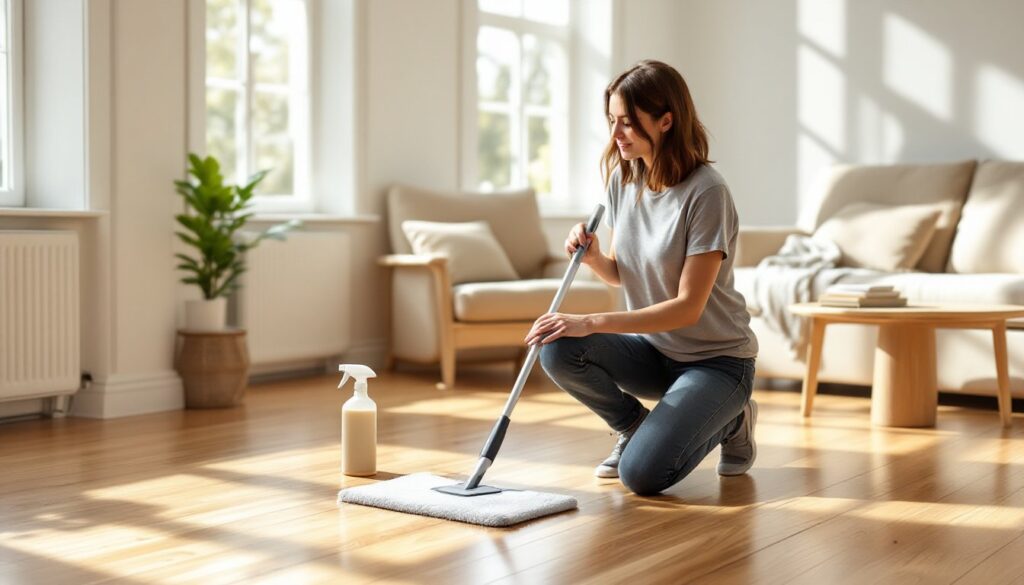
Using a damp (not wet) microfiber mop, work in overlapping passes following the wood grain. Wring out the mop until it’s barely damp, hardwood hates standing water. For stubborn spots, let the cleaner sit for 10-15 seconds, then wipe.
Step 4: Dry and Inspect
Most modern cleaners dry in 30-60 seconds. If you see streaks, you’ve used too much product or the mop was too wet. Buff with a dry microfiber cloth. Check for missed spots or residue buildup, especially along baseboards.
Frequency: Clean high-traffic areas weekly, the whole house every 1-2 weeks. Over-cleaning (daily mopping) can wear the finish prematurely.
Common Mistakes That Damage Hardwood Floors
Using Too Much Water
Hardwood is hygroscopic, it absorbs moisture and swells. Wet mopping or leaving puddles can warp planks, lift veneer on engineered floors, and encourage mold under the subfloor. Always wring out mops thoroughly and avoid steam cleaners unless the manufacturer explicitly approves them.
Skipping the Dust Mop
Mopping without sweeping first grinds dirt into the finish. Even the best cleaner for hardwood floor maintenance can’t fix micro-scratches from embedded grit. Make dry-mopping or vacuuming the first step, every time.
Using All-Purpose Cleaners
Products like Pine-Sol, Fabuloso, or bleach-based cleaners are too harsh for sealed wood. They strip finishes, discolor the wood, and leave sticky residue. Stick to cleaners labeled specifically for hardwood.
Ignoring Finish Type
Polyurethane, wax, and oil finishes each need different care. Using an oil soap on polyurethane creates a hazy film: using a chemical cleaner on waxed floors strips the protective layer. Check your flooring warranty or test a small area first.
Buffing With Dirty Mop Heads
Microfiber pads trap dirt and oil. Wash them after every 2-3 uses in hot water (no fabric softener, which reduces absorbency). A dirty mop spreads grime instead of removing it.
Budget-Friendly DIY Hardwood Floor Cleaning Solutions
Vinegar & Water (Use Sparingly)
Mix 1/2 cup white vinegar in 1 gallon of warm water. This cuts grease and grime but should only be used on sealed floors, and no more than monthly. The acidity can dull polyurethane over time, so follow up with a damp rinse if you notice haze.
Castile Soap Solution
Combine 1/4 cup liquid castile soap (like Dr. Bronner’s) with 1 gallon of water. This plant-based soap is pH-neutral and works well on most sealed finishes. Add 5-10 drops of essential oil (lemon or tea tree) for scent and mild antibacterial properties. Rinse with a damp mop to prevent residue.
Tea for Shine
Brew 2 black tea bags in 1 quart of hot water, let cool, then mop. Tannic acid in tea adds subtle shine without chemicals. This works best on darker woods like walnut or cherry, it can slightly darken lighter species. Test in a closet first.
Rubbing Alcohol Spot Cleaner
For sticky residue or scuff marks, dampen a cloth with 70% isopropyl alcohol and rub gently. It evaporates quickly and won’t harm sealed finishes. Follow up with your regular cleaner to blend the area.
DIY solutions save money, but consistency matters. Many homeowners mixing cleaning formulas at home see better results by switching to a commercial product after a few months. If you notice dulling or streaking, it’s time to invest in a pH-balanced cleaner.
Conclusion
Choosing the best hardwood floor cleaner means matching the product to your finish type, cleaning frequency, and household needs. Bona and Black Diamond lead for sealed polyurethane floors, Murphy’s works for oil finishes, and DIY vinegar or castile soap can stretch a budget, just use them correctly. The real trick isn’t the cleaner itself but the technique: damp (never wet) mopping, sweeping first, and avoiding all-purpose products that strip finishes. Stick to these basics, and your floors will stay clean and protected for decades.