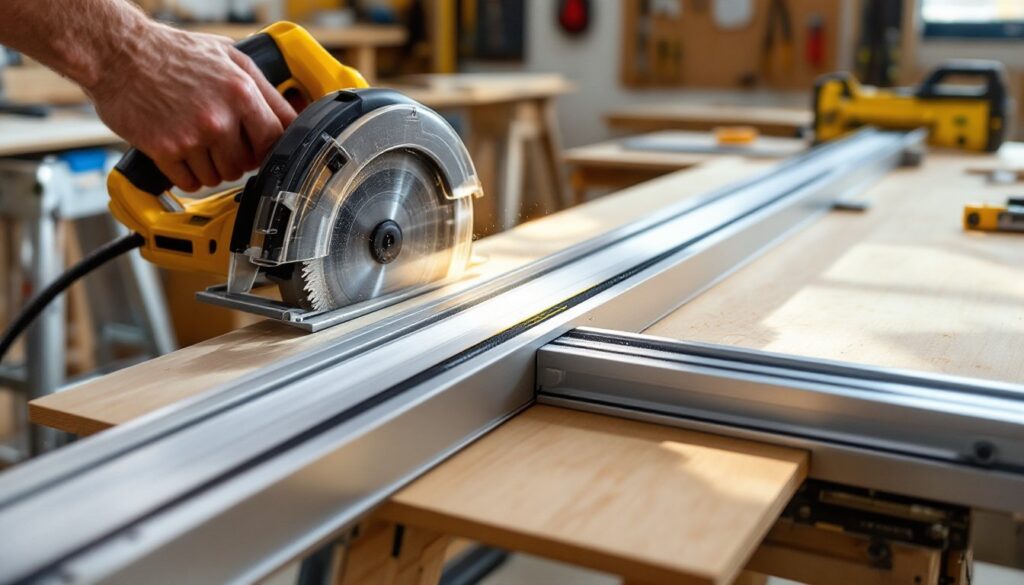

A sliding miter saw changes how quickly and accurately a DIYer can handle crosscuts, miters, and bevels on wider boards. Unlike a standard miter saw, the sliding action extends the blade’s reach, often up to 12 inches or more, making it ideal for crown molding, wide deck boards, and sheet goods. It’s one of the first upgrades serious hobbyists make when a basic chop saw no longer cuts it. This guide covers how sliding miter saws work, what sets them apart, and how to pick the right model for the projects ahead.
Table of Contents
ToggleKey Takeaways
- A sliding miter saw extends blade reach to 12–16 inches, enabling single-pass crosscuts on wider boards and materials that standard saws cannot handle in one motion.
- Dual-bevel sliding miter saws tilt both directions, eliminating the need to flip stock for compound angles and saving significant time on crown molding and complex framing projects.
- Choose a 10-inch model ($250–$450) for trim and DIY work, or invest in a 12-inch saw ($400–$700+) if you regularly cut 2×12 lumber or wider stock.
- Essential features like positive stops at common angles (0°, 15°, 22.5°, 45°), a tall rigid fence, and dual-bevel capability ensure repeatable, accurate cuts across multiple projects.
- Always wear safety glasses and hearing protection, clamp workpieces firmly, and let the blade reach full speed before cutting—proper technique prevents injury and extends tool life.
- With routine maintenance including blade changes every 50–100 hours and annual calibration, a quality sliding compound miter saw delivers decades of clean, professional results.
What Is a Sliding Miter Saw and How Does It Work?
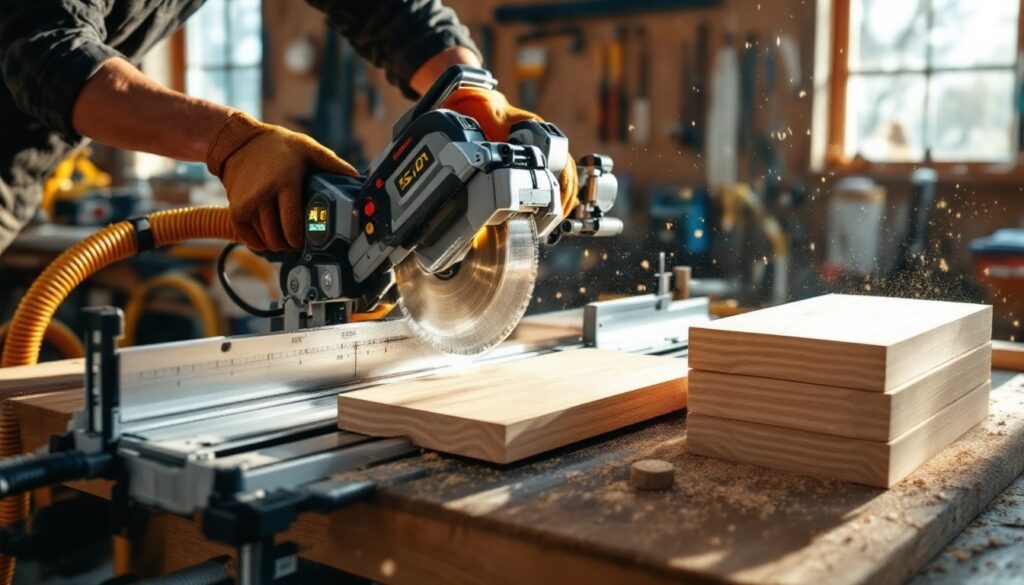
A sliding miter saw (sometimes called a compound sliding miter saw when it includes bevel capability) combines the angled cutting of a standard miter saw with horizontal rails that let the blade slide forward and back. The saw head rides on two steel rails, extending the blade’s travel past the fixed pivot point.
The basic setup includes:
- Blade: Typically 10-inch or 12-inch carbide-tipped blades spinning at 3,000–5,000 RPM.
- Miter table: Rotates left and right (usually 0° to 50° each direction) for angled crosscuts.
- Bevel adjustment: Tilts the blade left or right for bevel cuts, often 0° to 45° (some models go to 48° or dual-bevel for cuts in both directions).
- Sliding rails: Horizontal arms that guide the motor and blade assembly forward during the cut.
When the operator pulls the blade forward, the sliding action increases cutting capacity, the maximum width of board the saw can cut in a single pass. A 10-inch sliding miter saw typically handles boards up to 12 inches wide at 90°, while a 12-inch model can reach 14–16 inches, depending on the rail length.
The motor drives the blade downward and forward simultaneously. For a crosscut, the user positions the workpiece against the fence, lowers the spinning blade, and pulls it through the material in one smooth motion. Stops and detents at common angles (0°, 15°, 22.5°, 31.6°, 45°) lock the table for repeatable cuts without measuring every time.
Key Advantages of Sliding Miter Saws Over Standard Miter Saws
A standard (non-sliding) miter saw pivots on a fixed arm, limiting crosscut capacity to roughly the blade diameter minus the arbor and guard. A 10-inch standard saw maxes out around 5½ inches wide at 90°, fine for trim and 2×4s, but inadequate for 2×12 joists, wide shelving, or 8-inch crown molding laid flat.
Sliding miter saws deliver several practical benefits:
Wider crosscut capacity. The rails double or triple cutting width. This means one pass through a 12-inch board instead of flipping and finishing from the other side, which rarely lines up perfectly and leaves a ridge.
Cleaner cuts on sheet goods. Plywood, MDF, and melamine panels often require crosscuts wider than 6 inches. A sliding compound miter saw handles these in a single stroke, reducing splintering and the need for cleanup sanding.
Faster repetitive work. Crown molding, baseboards, and deck framing involve dozens of identical cuts. The extended capacity means fewer repositions and less downtime.
Compound angles without flipping stock. Dual-bevel sliding saws tilt both left and right, so cutting crown molding upside-down or complex roof framing doesn’t require rotating the workpiece, just adjust the bevel in the opposite direction.
Better dust collection on some models. The sliding mechanism often integrates a rear dust port that captures chips closer to the blade path, though effectiveness varies by brand and blade type.
The trade-off is footprint and weight. Sliding miter saws need 18–24 inches of clearance behind the saw for the rails to extend, unless the model uses a compact articulating-arm design. They also weigh 50–70 pounds compared to 30–40 for a standard miter saw, making job-site portability harder without a dedicated stand.
Choosing the Right Sliding Miter Saw for Your Projects
Picking a sliding miter saw depends on the projects planned, available workshop space, and budget. The key decision points break down into blade size, motor power, and feature set.
Blade Size and Motor Power
10-inch sliding miter saws suit trim carpentry, furniture building, and general DIY. They typically offer:
- Crosscut capacity of 12 inches at 90°, 8–9 inches at 45° miter.
- 15-amp motors (around 4,000 RPM), adequate for hardwoods up to 2 inches thick.
- Lighter weight (45–55 pounds) and lower cost ($250–$450 for quality models).
- Blade selection is broader, and replacement blades run $30–$60 for premium carbide.
12-inch sliding miter saws handle framing, deck building, and heavy stock:
- Crosscut capacity up to 16 inches at 90°, 12 inches at 45°.
- 15-amp motors at slightly lower RPM (3,200–3,800) but higher torque for thick or wet lumber.
- Heavier (60–75 pounds) and pricier ($400–$700+).
- Blades cost $50–$90 but last longer on demanding cuts.
For most DIYers working indoors on trim, cabinetry, and occasional framing, a 10-inch model hits the sweet spot. Framers, deck builders, and anyone regularly cutting 2×12 or wider stock should budget for a 12-inch saw.
Motor specs to check:
- Amperage: 15 amps is standard for corded models: anything less struggles in hardwood.
- No-load speed: 3,800–5,000 RPM for 10-inch: 3,200–4,000 for 12-inch. Higher RPM yields cleaner cuts in hardwood and composites.
- Soft-start and electric brake: Soft-start reduces startup jolt and breaker trips: an electric brake stops the blade in under three seconds, a critical safety feature.
Many enthusiasts appreciate hands-on tool reviews that test cut quality across different materials before committing to a purchase.
Essential Features to Look For
Beyond blade size, the following features separate a frustrating saw from a workhorse:
Dual-bevel capability. Single-bevel saws tilt left only: dual-bevel tilts left and right. Dual-bevel saves time on crown molding and eliminates the need to flip long boards. If the budget allows, it’s worth the extra $50–$100.
Positive stops and detents. Quality saws have detents at 0°, 15°, 22.5°, 31.6°, 33.9°, and 45° for both miter and bevel. The 33.9° stop is specifically for crown molding laid flat. Check that detents lock firmly, sloppy detents mean inaccurate repeat cuts.
Fence design. A tall, rigid fence (at least 4 inches high) supports boards vertically. Adjustable or sliding fences accommodate bevel cuts without removing the fence entirely. Some models include crown molding stops built into the fence.
Cutting capacity specs. Manufacturers list:
- Horizontal capacity (max width at 90°, 45° miter).
- Vertical capacity (max height against the fence).
- Nested crown capacity (size of crown molding the saw can cut at a 45° spring angle).
For trim work, look for at least 6½ inches vertical and 6½ inches nested crown. Framers need 7+ inches vertical.
Dust collection port. A 1¼-inch or 2½-inch dust port that connects to a shop vac drastically reduces cleanup. Some saws include a dust bag, but they fill quickly and reduce suction: a direct vac hose is more effective.
Laser guides or LED shadows. Lasers project a cut line onto the workpiece: LED shadow lights cast a blade shadow for alignment. Both help, but they’re not substitutes for test cuts and careful measuring. Lasers require periodic calibration.
Sliding rail design. Traditional dual-rail systems are robust but take up rear space. Some newer saws use articulating arms or single-rail designs that fold, reducing the footprint to as little as 12 inches behind the saw, ideal for garages with limited depth.
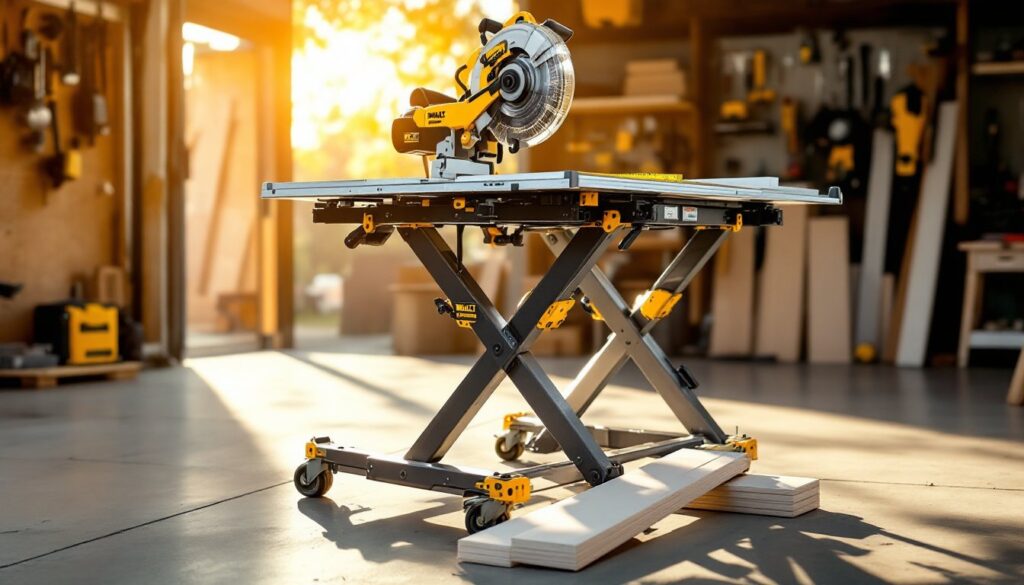
Weight and portability. If the saw stays in a workshop, weight matters less. For job sites, look for models under 55 pounds and a built-in carry handle. Pairing the saw with a folding stand (sold separately, $100–$200) makes setup faster.
Warranty and support. A three-year warranty is standard for mid-range saws: premium models offer five years. Brands with accessible service centers and affordable parts (blade guards, fences, brushes) save headaches down the road.
Common Projects Perfect for Sliding Miter Saws
Sliding miter saws excel at tasks where crosscut width, angle accuracy, and repetition matter. Here are projects that justify the investment:
Baseboard and crown molding installation. Inside and outside corner miters at 45° (or 31.6° for crown laid flat) require precise, repeatable cuts. A compound sliding miter saw handles 6-inch baseboards and up to 6½-inch crown in one pass. Always back-cut corners slightly (½° to 1°) to ensure tight face joints.
Deck framing and railings. Cutting 2×10 or 2×12 joists, stair stringers, and angled rail posts demands wide capacity and bevel capability. A 12-inch sliding saw cuts through pressure-treated lumber in a single pass, even when the wood is still wet from the yard.
Picture frames and small furniture. Mitering hardwood frame stock at exactly 45° ensures tight corners. A sharp 60- or 80-tooth blade minimizes tearout on oak, maple, or walnut. Clamp a stop block to the fence for identical leg or rail lengths.
Door and window casing. Interior trim around openings uses mitered or coped joints. The saw handles both, and the sliding action accommodates wider casings (up to 5½ inches) common in modern farmhouse styles.
Shelving and cabinetry. Crosscutting plywood shelves, dados in face frames, and angled cabinet backs all benefit from the extended capacity. Use a fine-tooth plywood blade (80+ teeth) and apply painter’s tape along the cut line to prevent splintering the veneer.
Fence pickets and lattice. Cutting dozens of pickets to identical length is tedious with a circular saw. Set a stop block, and a sliding miter saw knocks out 50 cuts in under ten minutes. Bevel the top of each picket at 30° for a decorative point.
Flooring transitions and thresholds. Hardwood or laminate transitions between rooms often require compound miters (miter + bevel). A dual-bevel sliding saw handles these without flipping the narrow threshold strip.
Safety notes for all projects:
- Always wear safety glasses and hearing protection (miter saws exceed 100 dB).
- Use a dust mask or respirator when cutting treated lumber, MDF, or materials that produce fine dust.
- Clamp or hold the workpiece firmly against the fence: never freehand.
- Let the blade reach full speed before starting the cut, and wait for a complete stop before raising the blade.
- Keep hands at least 6 inches from the blade path. Use a push stick or clamp for narrow offcuts.
- Check that the blade is rated for the material, metal-cutting blades differ from wood blades, and using the wrong one can shatter teeth or cause kickback.
DIYers tackling detailed trim projects often share jig plans and stop-block setups that improve accuracy and speed. For comprehensive home renovation tutorials that demonstrate sliding miter saw techniques in real projects, video walkthroughs can clarify setup and cut sequences.
Conclusion
A sliding miter saw bridges the gap between basic trim work and serious carpentry, offering the capacity and precision that a circular saw or standard miter saw can’t match. Choosing the right blade size, confirming the feature set aligns with planned projects, and budgeting for a solid stand or bench setup ensures the saw becomes a go-to tool instead of an expensive dust collector. With proper maintenance, blade changes every 50–100 hours of use, occasional rail lubrication, and annual calibration checks, a quality sliding compound miter saw delivers decades of clean, repeatable cuts.