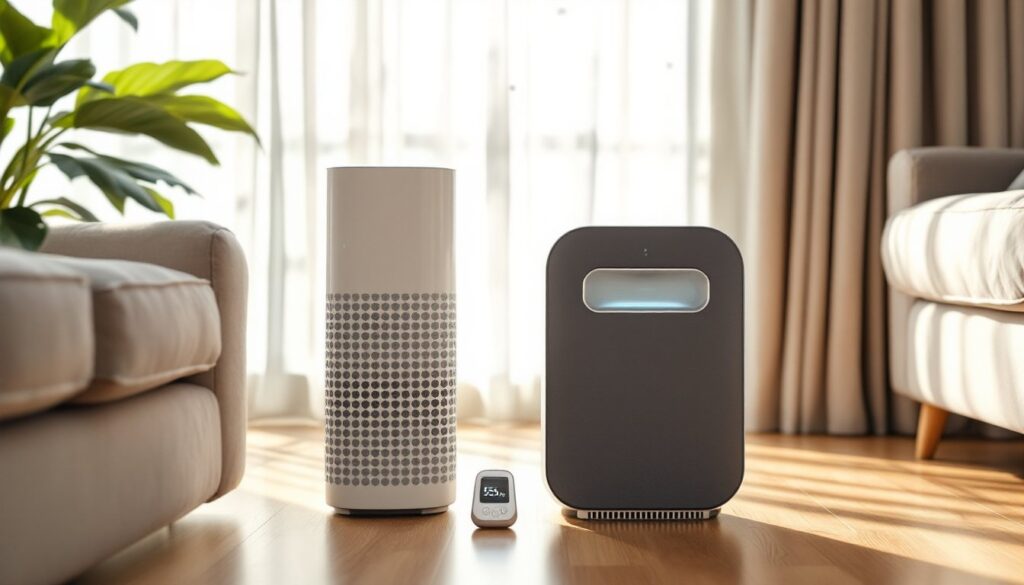

Indoor air quality isn’t just about comfort, it’s about health. Between mold spores, dust mites, pet dander, and seasonal allergens, the air inside your home can harbor more pollutants than the air outside. Two devices tackle these problems from different angles: dehumidifiers remove excess moisture, while air purifiers filter out airborne particles. But which one does your home actually need? Can you run both at the same time? And what about those 2 in 1 air purifier and dehumidifier units that promise to do it all? This guide breaks down the practical differences, when to use each device, and how to choose the right equipment for your space.
Table of Contents
ToggleKey Takeaways
- Dehumidifiers remove excess moisture to prevent mold and dust mites, while air purifiers filter airborne particles like allergens and pet dander—tackling two separate indoor air quality problems.
- A properly sized dehumidifier and air purifier setup works best for homes with both humidity and contamination issues; use separate units for larger spaces or combo units for small apartments where floor space is limited.
- Choose dehumidifier capacity based on square footage (30-pint for under 500 sq ft, 50-pint for 500–1,500 sq ft) and select air purifiers by CADR rating to match your room size for effective air cleaning.
- HEPA filters capture 99.97% of particles down to 0.3 microns and last 6–12 months, so budget $50–$150 annually for filter replacements when maintaining an air purifier.
- Proper placement matters: position dehumidifiers in room centers with clearance on all sides, elevate air purifiers 1–3 feet off the floor, and avoid plugging both devices into the same power strip to prevent circuit overload.
What’s the Difference Between a Dehumidifier and an Air Purifier?
A dehumidifier pulls moisture out of the air by drawing humid air over cold coils, causing water vapor to condense into a collection tank or drain line. Its job is strictly humidity control, reducing relative humidity (RH) to prevent mold growth, musty odors, and dust mite infestations. Most residential dehumidifiers target an RH between 30–50%, the range recommended by the EPA for indoor comfort and mold prevention.
An air purifier, on the other hand, filters airborne particles using a combination of HEPA filters, activated carbon, or UV-C light. It captures allergens, pet dander, smoke, VOCs (volatile organic compounds), and fine particulate matter (PM2.5). Air purifiers don’t touch humidity levels, they only clean what’s floating in the air.
The confusion often comes from combo units marketed as a dehumidifier and air purifier in one. These devices include both a compressor-based dehumidification system and a filtration stage (usually HEPA or carbon). They’re convenient but come with trade-offs in capacity and filter maintenance, which we’ll cover later.
When Should You Use a Dehumidifier vs. an Air Purifier?
Use a dehumidifier when:
- Your basement, crawl space, or bathroom consistently feels damp or smells musty.
- You see condensation on windows, pipes, or walls.
- Relative humidity stays above 60% (measure with a hygrometer, available for under $15).
- You’ve had mold or mildew issues in closets, behind furniture, or on drywall.
- You live in a humid climate or run into seasonal humidity spikes (summer in the Southeast, coastal regions year-round).
Dehumidifiers are essential in spaces where moisture threatens structural materials or creates conditions for biological growth. Basements with concrete slab floors, laundry rooms, and homes without central HVAC often benefit most.
Use an air purifier when:
- You or a family member has allergies, asthma, or respiratory sensitivity.
- You have pets that shed dander.
- You live near wildfire zones, high-traffic roads, or industrial areas.
- You’re dealing with lingering odors from cooking, smoke, or VOCs from new furniture or paint.
- You want to reduce airborne viruses or bacteria (HEPA filters capture particles down to 0.3 microns).
Air purifiers shine in bedrooms, living rooms, and home offices where people spend extended time. They’re also critical during wildfire season or after indoor renovations that release dust and VOCs.
Can You Use a Dehumidifier and Air Purifier Together?
Yes, and in many homes, running both makes sense. A dehumidifier air purifier setup tackles two separate problems: excess moisture and airborne contaminants. They don’t interfere with each other. In fact, lowering humidity can improve air purifier performance by reducing the load of moisture-loving allergens like mold spores and dust mites.
Standalone units vs. combo devices:
Running separate devices gives you more control, higher individual capacity, and easier maintenance. You can size each unit to your room’s specific needs and replace filters or empty tanks independently. The downside? Two devices take up more floor space and require two power outlets.
A dehumidifier and air purifier combo consolidates both functions into one chassis. Many smart home devices now offer combination units reviewed by tech outlets that integrate app controls and air quality sensors. These are ideal for small spaces like studio apartments, dorm rooms, or home offices where floor space is tight. But, combo units typically max out at 30–50 pint dehumidification capacity and may have smaller HEPA filters that require more frequent replacement. If you’re dealing with a damp 1,200-square-foot basement or severe allergy triggers, standalone units will outperform.
One note: don’t expect a combo unit to match the best air purifier and dehumidifier all in one performance of commercial-grade standalone equipment. They’re engineered for convenience, not maximum capacity.
How to Choose the Right Dehumidifier for Your Home
Dehumidifiers are rated by pint capacity, the amount of water they can remove from the air in 24 hours under specific conditions (typically 80°F and 60% RH). Here’s how to size one:
- Small rooms (up to 500 sq ft): 30-pint capacity
- Medium spaces (500–1,500 sq ft): 50-pint capacity
- Large basements or whole floors (1,500–2,500 sq ft): 70-pint capacity
- Severely damp or flooded areas: 90+ pint capacity
If your space has standing water, visible mold, or stays above 70% RH, bump up one capacity tier. Undersized units will run constantly without hitting target humidity.
Key features to consider:
- Drain options: Gravity drain hoses eliminate manual tank emptying. Critical for unattended basement use.
- Energy Star rating: Dehumidifiers pull significant power. Energy Star models use 15–30% less electricity.
- Built-in hygrometer and auto-shutoff: Lets the unit cycle on/off to maintain your target RH (usually 40–50%).
- Portability: Look for caster wheels and built-in handles if you’ll move it between rooms.
With or without air purification?
If you’re shopping for a dehumidifier with air purifier functionality, expect to pay 20–40% more and check the filter specs carefully. Many combo units use basic pre-filters, not true HEPA. For homes with serious moisture and allergy issues, separate units still win on performance.
How to Choose the Right Air Purifier for Your Home
Air purifiers are rated by Clean Air Delivery Rate (CADR), measured in cubic feet per minute (CFM) for smoke, dust, and pollen. Higher CADR means faster air cleaning. Match the unit’s CADR to your room size:
- Small rooms (up to 200 sq ft): CADR 100–150
- Medium rooms (200–400 sq ft): CADR 200–300
- Large rooms (400–600 sq ft): CADR 300–450
For open-concept spaces, calculate total square footage and consider multiple units or a single high-capacity model rated for 800+ sq ft.
Filter types:
- HEPA (High-Efficiency Particulate Air): Captures 99.97% of particles ≥0.3 microns. Essential for allergens, pet dander, and fine dust.
- Activated carbon: Absorbs odors, VOCs, and smoke. Look for units with at least 1–2 lbs of carbon media.
- UV-C or ionizers: Kill bacteria and viruses but produce trace ozone. Not necessary for most homes: HEPA alone is highly effective.
Maintenance reality:
HEPA filters last 6–12 months depending on air quality and runtime. Carbon filters degrade faster, 3–6 months in high-odor environments. Budget $50–$150/year for replacement filters. Some reviewed combo units include washable pre-filters that extend HEPA life.
Noise levels matter:
If you’re running an air purifier dehumidifier setup in a bedroom, check decibel ratings. Most air purifiers run 30–50 dB on low (whisper to normal conversation). Dehumidifiers with compressors hit 50–55 dB, closer to a refrigerator hum. For night use, look for sleep modes or variable-speed fans.
Placement and Maintenance Tips for Optimal Performance
Dehumidifier placement:
- Set it in the center of the room or at least 6–12 inches away from walls to allow airflow around all sides.
- Avoid corners, closets, or behind furniture where air circulation is restricted.
- Keep it on a level surface. If the unit tilts, the auto-shutoff sensor may malfunction.
- Run a hose to a floor drain or sump pump if available. This eliminates the risk of overflow and forgotten tank emptying.
- Clean the air intake filter every 2–4 weeks. Dust buildup reduces efficiency and can trip the compressor’s thermal cutoff.
Air purifier placement:
- Position it where you spend the most time, next to your bed, desk, or sofa.
- Elevate it 1–3 feet off the floor if possible (on a nightstand or low shelf). Air purifiers pull air from the bottom and exhaust clean air from the top.
- Keep it at least 6 inches from walls and away from curtains or other obstructions.
- Don’t place it near humidity sources like bathrooms or kitchens unless it’s specifically rated for damp environments.
- Replace filters on schedule. A clogged HEPA filter reduces airflow and can strain the motor. Most units have indicator lights.
Running both together:
If you’re using a standalone air purifier and dehumidifier setup, place them on opposite sides of the room to promote full air circulation. Don’t stack them or position them side by side, you’ll create dead zones.
For a 2 in 1 dehumidifier and air purifier, follow the manufacturer’s placement guidance (usually centered in the room with clearance on all sides). Check tank levels daily during humid months and inspect both the dehumidifier tray and air filter monthly.
Safety note:
Both devices draw significant amperage, don’t plug them into the same power strip or overloaded circuit. Use dedicated 15-amp outlets. If you’re running them in a damp basement, consider GFCI-protected outlets to reduce shock risk.
Conclusion
Choosing between a dehumidifier, an air purifier, or both depends on your home’s specific challenges. If you’re battling dampness and mold, start with a properly sized dehumidifier. If allergens or odors are the main concern, a HEPA air purifier is your best bet. For homes dealing with both issues, running separate units gives you the most control and capacity, but a quality combo unit works well in smaller spaces where floor space is tight. Match the equipment to your square footage, maintain filters and tanks regularly, and you’ll see measurable improvements in comfort and air quality.