
Nobody wants to play food safety roulette with yesterday’s roast chicken. Whether you’ve grilled a whole bird, fried up cutlets, or baked thighs for meal prep, knowing how long that cooked chicken stays safe in your fridge is as essential as knowing whether a wall’s load-bearing before you swing a sledgehammer. The good news? There’s a clear timeline backed by food safety standards, plus practical storage techniques that’ll keep your chicken fresh longer. This guide breaks down exactly how long cooked chicken lasts in the refrigerator, how to store it properly, and what warning signs mean it’s time to toss it.
Key Takeaways
- Cooked chicken is safe to eat for 3 to 4 days when stored in the refrigerator at 40°F or below, according to USDA food safety guidelines.
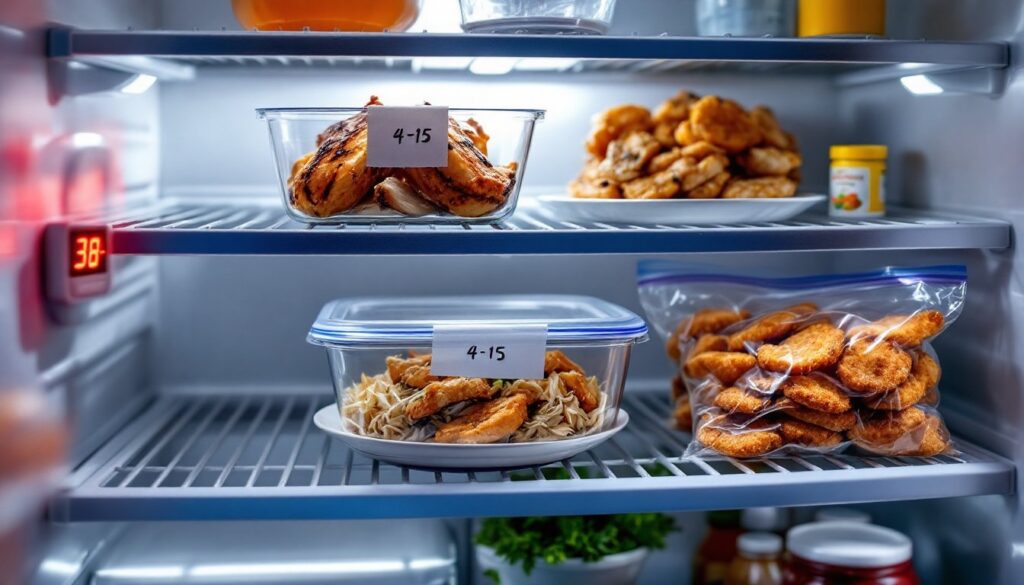
- Store cooked chicken in airtight containers on the bottom shelf of your fridge and refrigerate it within two hours of cooking to prevent bacterial growth.
- Inspect cooked chicken for signs of spoilage including sour smells, slimy texture, mold, or gray discoloration before eating it.
- Freeze cooked chicken for long-term storage by cooling it completely, portioning it, and wrapping it tightly; it stays safe for 2 to 6 months.
- Thaw frozen chicken safely in the refrigerator (24 hours per 1–2 pounds) or in cold water (1–3 hours), never at room temperature.
The 3-4 Day Rule: Safe Storage Timeline for Cooked Chicken
According to USDA food safety guidelines, cooked chicken is good for 3 to 4 days when stored in the refrigerator at 40°F or below. This timeline applies to all types of cooked chicken, whether it’s baked, fried, grilled, rotisserie, or boiled.
That four-day window isn’t arbitrary. Bacteria like Salmonella, Campylobacter, and Listeria can multiply on cooked poultry even under refrigeration, though cold temperatures slow their growth significantly. After day four, bacterial counts can climb into unsafe territory, even if the chicken looks and smells fine.
Here’s how the timeline breaks down by preparation method:
- Baked or roasted chicken: 3-4 days
- Fried chicken: 3-4 days (breading can trap moisture, so check carefully)
- Grilled chicken: 3-4 days
- Rotisserie chicken (store-bought): 3-4 days after purchase
- Chicken in soups or casseroles: 3-4 days (same rule applies to mixed dishes)
Your fridge temperature matters more than most people realize. Use a fridge thermometer to verify you’re actually hitting 40°F or lower. Many home refrigerators run warmer than their dial suggests, especially if the door opens frequently or the coils haven’t been cleaned in years. Think of it like checking your level before hanging cabinets, trust, but verify.
If you won’t eat the chicken within that 3-4 day window, freezing is your safety net. More on that below.
How to Properly Store Cooked Chicken in Your Fridge
Storage technique matters as much as timing. Toss hot chicken straight into a container and seal it? You’ve just created a steam bath that’ll speed up spoilage and raise your fridge’s internal temp. Here’s how to do it right.
Choose the Right Storage Container
Airtight containers are non-negotiable. Exposure to air accelerates oxidation and bacterial growth, plus it dries out the meat faster than leaving lumber uncovered in the sun.
Best options include:
- Glass containers with snap-lock lids: Won’t absorb odors, easy to see contents, microwave-safe
- BPA-free plastic containers: Lightweight and stackable, but replace them when they get scratched (scratches harbor bacteria)
- Heavy-duty zip-top freezer bags: Squeeze out excess air before sealing: works well for shredded chicken
- Aluminum foil or plastic wrap: Acceptable for short-term storage (1-2 days), but not ideal for the full timeline
Avoid storing chicken in its original takeout container unless it seals completely. Those flimsy hinged boxes leak air and often aren’t food-grade for extended storage.
Store chicken on the bottom shelf of your fridge, never the door. The bottom shelf maintains the most consistent temperature, and if any juices leak, they won’t drip onto fresh produce or ready-to-eat foods below. It’s the same principle as stacking paint cans, heavy and potentially messy stuff goes low.
Cool and Refrigerate Within Two Hours
The two-hour rule is your deadline. Cooked chicken left at room temperature for more than two hours enters the “danger zone” (40°F–140°F), where bacteria double roughly every 20 minutes. In hot weather above 90°F, that window shrinks to one hour.
To cool chicken quickly:
- Divide large portions into shallow containers (2-3 inches deep max). A whole chicken or big casserole dish takes forever to cool in the center, giving bacteria a head start.
- Separate meat from bones if possible. Bones insulate heat and slow cooling.
- Don’t stack hot containers in the fridge. Leave space around them for air circulation, just like you’d space studs at 16 inches on-center for proper load distribution.
Once the chicken reaches fridge temp (within 1-2 hours), you can stack containers normally. Label everything with the date using a permanent marker or masking tape. Trust me, three days from now you won’t remember whether that container is from Monday or Thursday.
Signs Your Cooked Chicken Has Gone Bad
Even within the 3-4 day window, cooked chicken can spoil if it wasn’t stored properly or if your fridge runs warm. Here’s what to look for, think of it as a visual inspection before you start any project.
Smell test: Fresh cooked chicken has a mild, savory aroma. Spoiled chicken smells sour, sulfurous, or ammonia-like. If it makes you recoil, toss it. No question.
Texture check: Cooked chicken should feel firm but tender. If it’s become slimy or sticky to the touch (even after wiping away condensation), bacteria have taken hold. That slime is biofilm, a bacterial colony you definitely don’t want to eat.
Visual cues:
- Mold: Any fuzzy spots, white patches, or green/black growth means immediate disposal. Don’t try to cut around it.
- Color changes: Gray or dull brown spots can indicate oxidation or spoilage. Fresh cooked chicken stays white or maintains its seasoned color.
- Excessive moisture: Pooled liquid in the container that looks cloudy or off-color is a red flag.
Taste test: If chicken passes the smell and visual checks but tastes off or sour, spit it out and throw the rest away. Don’t try to salvage it by reheating, heat kills active bacteria but doesn’t neutralize the toxins some bacteria leave behind.
When in doubt, pitch it. The cost of replacing a pound of chicken beats a bout of food poisoning every time. According to general food storage guidelines, most cooked meats follow similar timelines for safe consumption.
Extending Shelf Life: Freezing Cooked Chicken
Freezing cooked chicken extends its safe storage from days to months, specifically 2 to 6 months for best quality, though it remains safe indefinitely if kept at 0°F or below.
Here’s how to freeze it properly:
- Cool completely first. Never put warm chicken in the freezer: it’ll raise the freezer temp and create ice crystals that turn the meat mushy.
- Portion before freezing. Divide into meal-sized amounts so you only thaw what you need. Trying to chip apart a frozen chicken brick is about as fun as splitting shingles in January.
- Wrap tightly. Use freezer paper, heavy-duty foil, or vacuum-seal bags. Remove as much air as possible to prevent freezer burn.
- Double-wrap for long storage. Place wrapped chicken in a zip-top freezer bag for an extra moisture barrier.
- Label with date and contents. “Grilled chicken thighs, 4/21/26” beats playing freezer archaeology later.
Thawing safely is just as important as freezing:
- Refrigerator thawing: Safest method. Allow 24 hours for every 1-2 pounds. Place on a plate or in a container to catch drips.
- Cold water thawing: Seal chicken in a leak-proof bag, submerge in cold water, and change the water every 30 minutes. Takes 1-3 hours depending on portion size.
- Microwave thawing: Use the defrost setting and cook immediately after, as some areas may start to cook during thawing.
Never thaw chicken on the counter. It’s the food safety equivalent of cutting toward yourself with a utility knife, maybe nothing bad happens, but the risk isn’t worth it.
Once thawed, use the chicken within 1-2 days. Don’t refreeze previously frozen cooked chicken unless you’ve reheated it to 165°F first. Small kitchens especially benefit from smart freezer organization to maximize space and reduce food waste.
Conclusion
Cooked chicken lasts 3-4 days in the refrigerator when stored properly at 40°F or below. Use airtight containers, refrigerate within two hours of cooking, and trust your senses if something seems off. For longer storage, freeze portions for up to six months. These aren’t just suggestions, they’re food safety standards that keep your household healthy. Treat your fridge like you’d treat your tool kit: maintain it, use it correctly, and don’t ignore warning signs.