
If you’re tracking water consumption to cut utility bills or just curious whether your dishwasher is an efficiency champ or a resource hog, you’re asking the right question. Dishwashers have evolved dramatically over the past two decades, and the difference between a 2005 model and a 2026 Energy Star unit can mean hundreds of gallons, and dozens of dollars, saved each month. Understanding how many gallons of water a dishwasher uses isn’t just trivia: it’s practical knowledge that informs buying decisions, maintenance habits, and even whether you should keep hand-washing that stack of pots. Let’s break down the numbers, compare modern machines to older units and hand washing, and walk through actionable ways to keep consumption lean.
Key Takeaways
- Modern Energy Star dishwashers use just 3 to 5 gallons per cycle, roughly one-third the water of pre-2000 models, making them significantly more efficient for your utility bills.
- Hand washing a full load uses 20 to 27 gallons with continuous running or 8 to 12 gallons with basin filling, far exceeding what a dishwasher uses per cycle.
- Running full loads, skipping pre-rinses, and using eco mode are the quickest ways to reduce water consumption by 10–20% without any upfront investment.
- Upgrading from a 10+ year old dishwasher to an Energy Star model typically pays for itself in 3 to 5 years through water and energy savings alone.
- Monthly filter cleaning and quarterly spray arm inspection prevent mineral buildup and reduce the need for heavy cycles or rewashing, cutting water waste by 10–15%.
Average Water Consumption by Dishwasher Type
Not all dishwashers sip water at the same rate. The age, efficiency rating, and design of your machine determine whether you’re using 3 gallons per cycle or closer to 10 or more. Here’s what to expect across the spectrum.
Modern Energy Star Dishwashers
Energy Star–certified dishwashers manufactured after 2013 use an average of 3 to 5 gallons per cycle, with many newer models pushing closer to the 3-gallon mark. The 2026 generation leverages soil sensors, spray arm optimization, and high-efficiency filtration to scrub dishes clean without flooding the tub. Standard-sized units (24-inch width, 8–16 place settings) fall into this range: compact 18-inch models often use slightly less, around 2.5 to 3.5 gallons.
These machines meet strict federal standards: they must use 3.5 gallons or less per cycle and 270 kWh or less per year to earn the Energy Star badge. That’s roughly one-third the water of a pre-2000 dishwasher. Brands typically achieve this through multi-stage wash arms, recirculating pump designs, and precise water metering valves that deliver just enough H₂O to saturate each load.
If you’re shopping, look for the yellow EnergyGuide label on the front of the unit. It lists estimated annual water and electricity costs based on 4 cycles per week. Many 2026 models also include half-load or zone wash settings, which use even less water when you’re not filling every rack.
Older Dishwasher Models
Dishwashers built before 1994 consumed 10 to 15 gallons per cycle, sometimes more if the rinse cycle ran long or the float valve malfunctioned. Units from the mid-1990s to early 2010s averaged 6 to 10 gallons, depending on cycle selection and manufacturer. These older machines lack soil sensors and rely on fixed fill times, so they dump the same volume of water whether you’re washing a full load or three coffee mugs.
If your dishwasher is 15+ years old, it’s likely using at least double what a new Energy Star model would. That translates to an extra 500 to 1,000 gallons per year for a household running 4 cycles weekly. Beyond water waste, older units often have worn spray arms, clogged filters, and degraded door gaskets, all of which reduce cleaning performance and tempt you to pre-rinse or rewash, compounding the waste.
Replacement cost for a mid-tier Energy Star dishwasher runs $400 to $800 installed (regional labor rates vary). Payback period from water and energy savings alone is typically 3 to 5 years, shorter if your local water rates are high or you run frequent cycles.
Dishwasher vs. Hand Washing: Which Uses More Water?
Conventional wisdom says hand washing is gentler on the planet, but the data tells a different story, especially if you’re one of those folks who leaves the tap running.
Hand washing a full 12-place-setting load under a continuous stream can burn through 20 to 27 gallons of water, according to studies on typical kitchen faucet flow rates (2.2 gallons per minute at standard pressure). Even if you’re disciplined, filling one basin for soapy water and another for rinsing, you’ll still use 8 to 12 gallons. Compare that to a modern Energy Star dishwasher’s 3 to 5 gallons, and the machine wins by a landslide.
The efficiency gap widens when you factor in water temperature. Dishwashers heat water internally to 130–160°F, which is hot enough to dissolve grease and sanitize without extended contact time. Hand washing rarely exceeds 110°F (most people can’t tolerate hotter water on bare skin), so you compensate with longer scrubbing and more detergent.
There’s one exception: if you’re washing only a few items, say, two plates and a fork, hand washing in a small basin uses less water than firing up a dishwasher for a partial load. But for everyday dinner cleanup, the dishwasher is the greener choice. Running it only when fully loaded is key: partial loads waste both water and energy.
Factors That Affect Your Dishwasher’s Water Usage
Even within the same model, actual water consumption can swing by 20% or more depending on how you load, maintain, and operate the machine. Here’s what moves the needle.
Cycle selection is the biggest variable. A normal or auto cycle uses the baseline 3–5 gallons, while a heavy or pots-and-pans cycle may add an extra rinse phase, pushing usage to 5–6 gallons. Conversely, eco or light cycles often use as little as 2.5–3 gallons by extending wash time and lowering water temperature. If your dishes aren’t heavily soiled, eco mode is your friend.
Soil sensors on modern machines adjust water volume and cycle length based on turbidity (how dirty the water is). If you scrape plates before loading, removing large food scraps but leaving the residue, the sensor reads lower soil levels and cuts water use. Over-rinsing dishes tricks the sensor into thinking they’re already clean, which can paradoxically reduce cleaning performance because the detergent has nothing to activate on.
Water pressure at your home’s supply line matters. Dishwashers are designed for 20–120 psi: if pressure is below 20 psi, the fill cycle takes longer and may trigger extra rinses. If you notice your dishwasher running extended cycles, check the shutoff valve under the sink, it should be fully open.
Maintenance issues quietly inflate water use. A clogged spray arm (look for food debris in the tiny nozzle holes) reduces cleaning efficiency, prompting you to rewash or select heavier cycles. A failing inlet valve or float switch can cause overfilling. Check the filter monthly and clear it of any buildup: most filters twist out without tools. Inspect the spray arms every few months and use a toothpick to clear blocked jets.
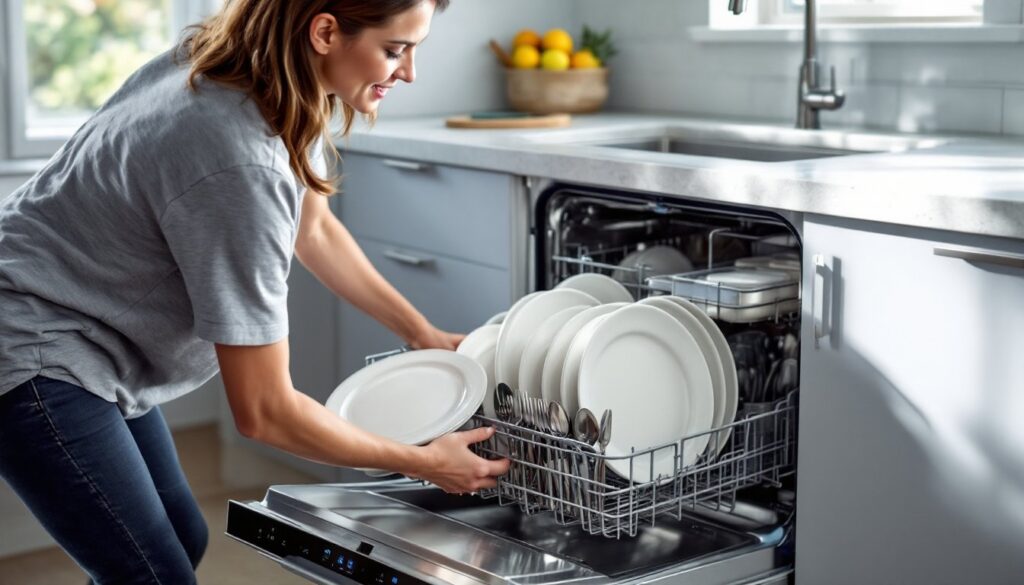
Load size and arrangement also play a role. Overloading blocks water spray and forces you to re-run dishes. Underloading means you’re using the same water for fewer items. Aim to run the machine only when it’s 80–100% full, and use the upper rack for cups and bowls, lower rack for plates and pots, to maximize spray coverage.
How to Reduce Water Consumption and Lower Your Bills
Tightening up your dishwasher habits can shave 10–20% off your water bill without spending a dime, and a few strategic upgrades can double those savings. Here’s the playbook.
Run full loads only. This is the single biggest lever. If you’re running the machine half-empty three times a week, consolidate to two full cycles. Many households find that switching from daily half-loads to every-other-day full loads cuts annual water use by 200+ gallons.
Skip the pre-rinse. Modern detergents (especially enzyme-based pods) are formulated to work on dried, stuck-on food. Scraping plates is enough: rinsing under the tap for 30 seconds per dish wastes 5–10 gallons per load. If you’re skeptical, run a test load with scraped-only dishes and check the results.
Use eco mode religiously. Yes, it takes longer, often 2.5 to 3 hours, but it uses less water and energy by heating more gradually and extending soak time. Set it to run overnight or while you’re out. Most users report identical cleaning performance compared to normal mode.
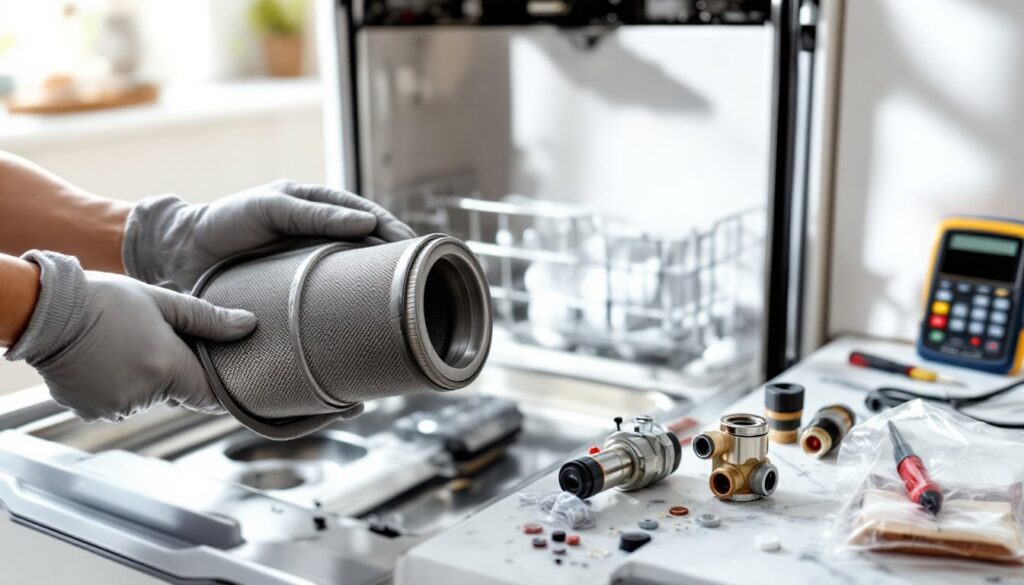
Check and clean the filter every month. A gunked-up filter reduces water flow and cleaning efficiency, tempting you to select heavy cycles or rewash. Most dishwashers have a cylindrical or flat mesh filter at the bottom of the tub. Twist it out, rinse under hot water, scrub with a soft brush, and reinstall. Takes 90 seconds.
Inspect spray arms and nozzles quarterly. Remove the lower and upper spray arms (they typically pop off with a quarter-turn or snap-clip). Hold them up to the light and look through each nozzle. Use a toothpick or straightened paperclip to clear clogs. Mineral buildup from hard water is the usual culprit: if deposits are heavy, soak arms in a 50/50 vinegar-water solution for 30 minutes.
Install a water softener if you have hard water (above 7 grains per gallon). Hard water leaves mineral films on dishes and inside the machine, reducing cleaning performance and prompting extra rinses. A whole-house softener runs $400–$1,200 installed, or you can use dishwasher-specific salt tablets in models with built-in softener compartments.
Upgrade to an Energy Star model if yours is 10+ years old. Payback period is short, especially if local rebates are available. Many utilities offer $50–$100 rebates on Energy Star appliances. Check ENERGY STAR’s rebate finder for your zip code.
Use delay-start timers to run the machine during off-peak hours if your utility has time-of-use water or electricity rates. Some municipalities charge less for water used after 9 PM. Check your bill or call your water district.
Fix leaks immediately. A dripping door gasket or loose inlet hose can add 5–10 gallons per day of waste. Replacement gaskets cost $15–$30 and snap in place without tools on most models. If you see puddles under the machine, pull it out, inspect the inlet and drain hoses, and replace any with visible cracks or bulges (use reinforced stainless-steel braided hoses, not plain rubber).
For additional insights on choosing efficient appliances, dishwashers tested by appliance labs consistently show that newer models outperform older units in both water and energy use. If you’re planning a broader kitchen remodel and want to coordinate appliance choices with layout and design, resources on kitchen planning can help you think through workflow and utility connections. And if you’re the type who enjoys diving into the engineering side of home systems, DIY guides often cover appliance teardowns and efficiency hacks in detail.
Conclusion
Modern dishwashers are water-sipping workhorses that beat hand washing on nearly every measure, 3 to 5 gallons per cycle versus 20+ for most manual methods. If you’re still running a pre-2010 machine, an upgrade pays for itself in a few years through lower utility bills and better cleaning. In the meantime, running full loads, skipping the pre-rinse, and keeping filters clear will stretch every gallon further. Small habits compound: even a 10% reduction in water use adds up to hundreds of gallons saved annually.