
Finding droppings in your pantry or hearing scratching in the walls doesn’t mean you need to resort to lethal traps. Humane mouse traps let homeowners catch and release rodents without poison or snap mechanisms that kill. They’re effective, safer around kids and pets, and surprisingly straightforward to use when you understand the setup and placement. This guide walks through the different trap types, proper baiting techniques, and what to do once you’ve caught your uninvited guest, plus how to mouse-proof your home so they don’t come back.
Key Takeaways
- A humane mouse trap captures rodents alive with smooth interiors, ventilation holes, and quick-trigger mechanisms that prevent injury while ensuring safe containment.
- Proper placement perpendicular to baseboards near droppings, gnaw marks, and grease marks is more critical to success than the trap type itself.
- Check humane traps every 4–6 hours to prevent stress, dehydration, or hypothermia, and release captured mice at least 100 yards away in wooded areas to prevent their return.
- Seal entry points as small as ¼ inch using steel wool and caulk, store food in airtight containers, and eliminate nesting sites through decluttering to prevent future mouse problems.
- Glue traps and snap traps cause prolonged suffering and should be avoided; if you can’t commit to frequent checking, hire a professional live removal service instead.
What Makes a Mouse Trap Truly Humane?
A humane mouse trap captures the animal alive without causing injury, stress fractures, or entrapment that leads to dehydration. The key distinction is containment without harm, the mouse enters, the door or mechanism closes, and the animal remains unharmed until release.
True humane traps have these features:
- Smooth interiors with no sharp edges, wire mesh that’s tight enough to prevent escape but won’t snag paws or tails
- Ventilation holes to ensure adequate airflow during containment
- Opaque or semi-opaque housing to reduce stress (mice feel safer in darkness)
- Quick-trigger mechanisms that close the door fast enough to prevent escape but gentle enough to avoid tail injuries
Glue traps and snap traps don’t qualify. Glue boards cause prolonged suffering and often result in self-mutilation as mice try to escape. Traditional snap traps kill but often fail to do so instantly, leaving injured animals.
Homeowners should check traps every 4–6 hours once set. Mice have high metabolisms and can die from stress, dehydration, or hypothermia if left confined too long. If you can’t commit to frequent checks, humane trapping isn’t the right approach, or you’ll need to hire a pest control service that specializes in live removal.
Top Types of Humane Mouse Traps for Your Home
Live Catch Cage Traps
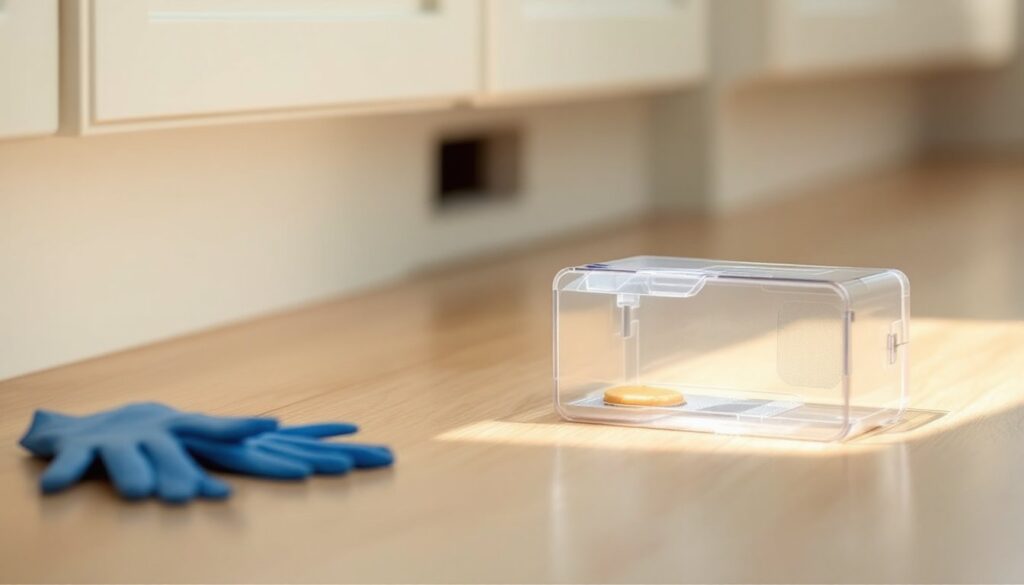
These are the most common humane option. They’re small rectangular or cylindrical cages (typically 6–10 inches long) with a spring-loaded or gravity door at one or both ends. The mouse enters to reach bait, steps on a trigger plate, and the door snaps shut.
Pros:
- Single-catch design is simple and reliable
- Easy to bait and clean
- Durable metal or heavy-duty plastic models last for years
- Transparent models let you confirm a catch without opening the trap
Cons:
- You’ll need multiple traps if you have more than one mouse
- Requires regular checking to prevent animal distress
Most catch-and-release cage traps use peanut butter, sunflower seeds, or chocolate as bait. Position the bait at the far end so the mouse fully enters and triggers the plate.
Bucket and Multi-Catch Traps
Bucket traps use a spinning rod or see-saw ramp mounted over a 5-gallon bucket. Mice walk the plank toward bait, the mechanism tips or spins, and they drop into the bucket. Multi-catch box traps work similarly but house multiple mice in a single enclosed chamber.
Pros:
- Can capture multiple mice in one night
- No reset required between catches
- Effective in barns, garages, or attics with heavy infestations
Cons:
- Mice confined together can become aggressive or stressed
- Bucket-style traps require adding a few inches of bedding (shredded paper, not water) to prevent injury from the fall
- More cleanup involved
If using a bucket trap, check it first thing in the morning. Don’t leave multiple mice confined together for more than a few hours. Some homeowners drill ventilation holes in buckets or use commercially available multi-catch models with built-in airflow.
How to Set Up and Use a Humane Mouse Trap Effectively
Proper placement matters more than the trap itself. Mice travel along walls and avoid open spaces, so position traps perpendicular to baseboards with the entrance facing the wall. Look for these signs of mouse activity:
- Droppings (small, dark pellets about the size of a rice grain)
- Gnaw marks on food packaging, wood, or wiring
- Grease marks along walls where their fur rubs repeatedly
- Nesting material like shredded paper or fabric in corners
Follow these setup steps:
- Wear gloves when handling traps. Human scent can deter cautious mice, though most will overcome this if bait is appealing enough.
- Bait the trap with a pea-sized amount of peanut butter, a sunflower seed, or a small piece of chocolate. Avoid loose bait like cheese that can be snatched without triggering the mechanism.
- Set the trigger according to manufacturer instructions. Most cage traps have a simple hook-and-plate system: multi-catch traps may require assembling a ramp or spinning rod.
- Place near activity zones but away from areas where kids or pets can access. Under sinks, behind appliances, in attics, or along garage walls are common hotspots.
- Check every 4–6 hours, especially overnight and early morning when mice are most active.
Safety note: Always wear gloves when handling traps or captured mice. Rodents can carry hantavirus, salmonella, and other pathogens transmitted through urine, droppings, or bites. If you’re dealing with a large infestation or find evidence of rats (larger droppings, more aggressive chewing), contact a licensed pest control professional. Rats require different traps and pose greater health risks.
What to Do After Catching a Mouse
Once you’ve captured a mouse, timing is critical. Don’t leave the animal in the trap longer than necessary.
Release location:
- Transport the trap at least 100 yards from your home, mice have strong homing instincts and will return if released too close
- Choose a wooded area, field, or brush pile away from neighboring homes
- Avoid releasing near roadways or areas with heavy foot traffic
- Some municipalities have regulations about wildlife release: check local ordinances if you’re in a densely populated area
Release process:
- Carry the trap to your release site using gloves.
- Open the door and gently tilt the trap so the mouse can exit on its own. Don’t shake or dump the trap.
- Step back and give the animal space to orient itself and leave.
After release, clean the trap with a 10% bleach solution (1 part bleach to 9 parts water). Spray down the interior and exterior, let it sit for 5 minutes, then rinse and dry. This kills pathogens and removes scent markers that might deter future catches.
If the mouse is injured or appears sick:
Do not release it. Contact a local wildlife rehabilitator or animal control. Releasing sick or injured animals is inhumane and can spread disease.
If you’re squeamish about handling live mice:
Humane trapping might not be for you. Consider hiring a pest control service that offers live removal, or use exclusion methods (sealing entry points) combined with professional intervention.
Preventing Future Mouse Problems in Your Home
Catching mice is only half the job. If you don’t address entry points and attractants, new mice will move in.
Seal entry points:
- Mice can squeeze through gaps as small as ¼ inch, about the diameter of a pencil. Inspect your home’s exterior for cracks in the foundation, gaps around utility penetrations (pipes, vents, cables), and openings where siding meets the foundation.
- Use steel wool stuffed into holes, then cover with caulk or expanding foam rated for pest control. Mice can chew through standard foam alone.
- Install door sweeps on exterior doors, especially garage doors with large gaps at the bottom.
- Check weatherstripping around windows and replace any that’s cracked or missing.
Eliminate food sources:
- Store pantry staples (flour, rice, cereal, pet food) in airtight plastic or glass containers. Mice chew through cardboard and thin plastic bags.
- Clean up crumbs and spills immediately. Wipe down counters, sweep floors, and don’t leave dirty dishes in the sink overnight.
- Keep garbage in sealed bins. Outdoor trash cans should have tight-fitting lids.
- Pick up fallen birdseed or fruit under feeders and trees.
Reduce nesting sites:
- Declutter basements, attics, and garages. Mice nest in cardboard boxes, piles of fabric, and stored paper.
- Store firewood at least 20 feet from the house and keep it elevated off the ground.
- Trim shrubs and vegetation away from the foundation, mice use overgrown plants as cover.
For additional decluttering strategies and storage solutions, organizing high-risk areas like garages and basements can significantly reduce rodent habitat.
Monitor regularly:
Even after sealing and cleaning, walk your home’s perimeter every few months. Foundations settle, weatherstripping wears out, and new gaps appear. Mice are opportunistic, if they find a way in, they’ll take it.
If you’ve sealed entry points and eliminated attractants but still see signs of mice, you may have a larger structural issue (gaps in subflooring, breaches in crawl spaces) or an infestation that requires professional assessment. For comprehensive home maintenance tips that cover seasonal inspections and exterior upkeep, staying proactive prevents small problems from becoming major pest issues.