If you’re shopping for a dishwasher detergent that skips the synthetic fragrances and harsh chemicals, Seventh Generation has probably landed on your radar. This Vermont-based brand built its reputation on plant-derived formulas and transparent ingredient lists, but does their dishwasher detergent actually get your dishes clean, or do you sacrifice performance for eco-credentials? Whether you’re dealing with hard water spots, baked-on casserole dishes, or just want fragrance-free peace of mind, this guide walks through what Seventh Generation offers, how it stacks up in real-world use, and whether it’s worth the premium over conventional detergents.
Key Takeaways
- Seventh Generation dishwasher detergent uses plant-based enzymes and mineral-derived ingredients certified as biobased and EPA Safer Choice, making it ideal for households with fragrance sensitivities and septic systems.
- While Seventh Generation dishwasher detergent performs excellently on daily dishes and protein-based stains, it requires pre-rinsing for baked-on food and rinse aid for hard water areas exceeding 180 ppm to prevent spotting.
- The free and clear dishwasher pods offer the best convenience-to-effectiveness balance at $0.32–$0.38 per load, though powder is 30% cheaper and provides dose flexibility for varying water hardness levels.
- Proper loading—scraping (not rinsing), facing soiled surfaces toward spray arms, and using Normal cycles—is critical for optimal performance with Seventh Generation’s plant-powered formula.
- At a 20–35% premium over conventional brands, Seventh Generation dishwasher detergent justifies the cost through transparent ingredient labeling and third-party certifications, plus potential long-term savings for septic-system homes.
- Hard water mineral buildup and inadequate rinse aid remain the primary performance gap, easily solved with water-hardness testing and monthly vinegar cleaning cycles.
What Makes Seventh Generation Dishwasher Detergent Different?
Seventh Generation’s dishwasher detergents use plant-based enzymes and mineral-derived ingredients instead of synthetic surfactants and phosphates. The formula centers on protease and amylase enzymes to break down protein and starch residues, with sodium carbonate (washing soda) as the primary cleaning agent.
The brand publishes a full ingredient list on every package, uncommon in the cleaning aisle. You won’t find chlorine bleach, synthetic fragrances, dyes, or phosphates. Their free and clear dishwasher detergent formulas skip all added scent, making them suitable for households with fragrance sensitivities or respiratory concerns.
Packaging uses post-consumer recycled plastic and paperboard certified by the Forest Stewardship Council. The pods themselves are wrapped in a water-soluble polyvinyl alcohol (PVA) film that dissolves during the wash cycle. While PVA isn’t biodegradable in the strictest sense, it breaks down into carbon dioxide and water under wastewater treatment conditions.
Seventh Generation earned USDA Certified Biobased Product certification (ranging from 65-75% biobased content depending on the formula) and carries EPA Safer Choice certification, meaning every ingredient meets EPA’s strict safety standards for human and environmental health.
Performance Review: Does It Actually Clean Your Dishes?
Testing 7th generation dishwasher detergent against everyday messes reveals where it excels and where it struggles. The enzyme blend handles most daily loads, coffee mugs, cereal bowls, pasta plates, without issue. Protease enzymes effectively break down egg yolk, dairy, and meat proteins when given adequate wash time.
Hard water creates the biggest performance gap. If your water hardness exceeds 180 ppm (parts per million), expect spotting on glassware and a chalky film on plastics. Seventh Generation formulas contain less chelating agent (the compound that binds to calcium and magnesium ions) than conventional detergents, so hard water minerals compete for cleaning power. Run a rinse aid, their own or a generic citric acid-based option, to minimize spotting.
Baked-on or burnt food requires pre-rinsing or scraping. The plant enzymes work at lower temperatures than synthetic alternatives, so they need direct contact with food residue and adequate moisture. Don’t expect it to dissolve dried cheese or carbonized edges from a sheet pan. A quick rinse before loading saves rewashing.
Recent testing by Good Housekeeping’s 2026 Cleaning Awards recognized Seventh Generation Triple Action Dishwasher Detergent for overall cleaning effectiveness, particularly noting performance on protein-based stains and grease removal in normal wash cycles.
Performance summary:
- Excellent: Daily dishes, fresh food residues, coffee/tea stains, light grease
- Good: Moderate starch buildup, lipstick on glassware, most baking dishes with scraping
- Needs help: Burnt-on food, heavy hard water without rinse aid, dried egg or cheese without pre-rinse
Best Seventh Generation Dishwasher Detergent Products for Your Home
Seventh Generation offers three main formats. Each serves different household needs and dishwasher types.
Seventh Generation Dishwasher Pods (Free & Clear)
Their most popular option. These free and clear dishwasher pods contain pre-measured powder in a dissolvable wrapper. Each pod combines detergent, rinse aid, and a glass-protecting formula in one unit. Best for standard loads in newer dishwashers with dedicated pod dispensers. The fragrance free dishwasher detergent formula makes this the go-to for sensitive households.
Triple Action Dishwasher Detergent Packs
Adds a degreasing booster and slightly stronger enzymes. The three-chamber design separates enzymes, oxygen boosters, and rinse agents until water activates them during different wash phases. Use these for heavier loads or if you cook with a lot of oil. Still unscented dishwasher detergent, even though the performance upgrade.
Powder Dishwasher Detergent (Free & Clear)
The most economical per-load option. Powder lets you adjust the dose for water hardness and soil level, use 1.5 tablespoons for soft water, up to 2.5 tablespoons for hard water or heavy soiling. It dissolves better in older dishwashers with powder cups instead of pod dispensers. Comes in a recyclable cardboard box rather than plastic.
Auto Dish Gel (now harder to find)
Seventh Generation phased out their liquid gel in most markets. If you find it, it works well for hand-washing delicate items or pre-treating stuck-on food, but pods and powder outperform it for machine washing.
For most DIY and home maintenance folks, the Free & Clear pods balance convenience with performance. Keep powder on hand if your water situation changes seasonally or if you’re doing a particularly grimy load after a big project dinner.
How to Use Seventh Generation Dishwasher Detergent for Optimal Results
Getting consistently clean dishes requires adjusting your routine to match the plant-based formula.
Loading strategy:
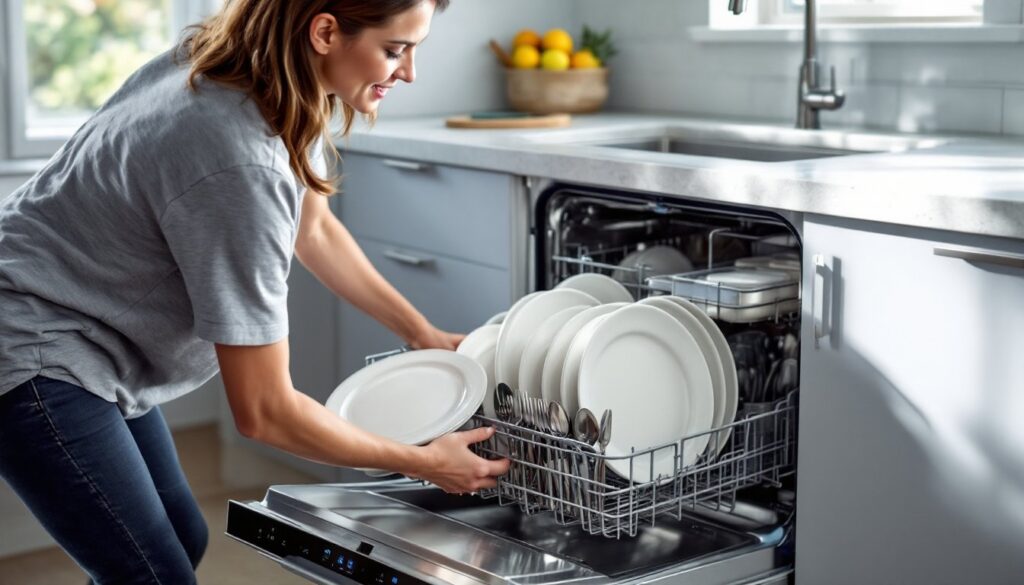
- Scrape, don’t rinse. Remove large food particles, but leave a thin film of grease and residue, enzymes need organic material to activate properly.
- Face soiled surfaces toward the spray arms. The center and bottom spray arms do most of the work: nest bowls and cups at an angle, not flat.
- Don’t overcrowd. Pods and powder need water circulation to dissolve and distribute. Leave gaps between large items.
Detergent placement:
- For pods: Place directly in the dispenser cup, not in the bottom of the tub. The timed release matches the wash cycle phases.
- For powder: Fill the main wash cup to the line (typically 2 tablespoons). In hard water, add an extra half tablespoon in the pre-wash cup if your dishwasher has one.
Cycle selection:
Use Normal or Auto cycles for everyday loads. Seventh Generation formulas are optimized for 130-140°F water temperatures, the range most normal cycles reach. Skip Quick Wash unless dishes are lightly soiled: the enzymes need 15-20 minutes of contact time to work effectively.
For heavily soiled cookware, use Heavy or Pots & Pans cycle, which extends wash time and raises water temperature. Pre-treat burnt-on spots with a paste of powder and water, let sit 10 minutes, then load.
Water hardness adjustment:
Test your water hardness with an inexpensive test strip (under $10 at hardware stores). If hardness exceeds 120 ppm:
- Increase detergent by 25%
- Run rinse aid every cycle
- Monthly maintenance: Run an empty cycle with 1 cup white vinegar in the bottom to dissolve mineral buildup
Storage:
Store pods in their original container with the lid sealed tight. Humidity causes the PVA film to stick together or dissolve prematurely. Keep powder in a cool, dry spot, moisture clumps the powder and deactivates enzymes.
Cost Comparison: Is Seventh Generation Worth the Price?
Seventh Generation dishwasher detergent typically costs 20-35% more than conventional brands like Cascade or Finish. Breaking down the numbers:
Per-load cost (approximate, varies by region and retailer):
- Seventh Generation Free & Clear Pods (45-count): $0.32-$0.38 per load
- Seventh Generation Powder (75-load box): $0.22-$0.28 per load
- Cascade Platinum Pods: $0.28-$0.33 per load
- Finish Quantum: $0.30-$0.35 per load
- Store-brand powder: $0.08-$0.15 per load
The premium narrows when you factor in buying in bulk or catching sales. Many warehouse clubs stock 90-count pod packs that drop per-load cost to around $0.26.
Value assessment depends on priorities:
If you’re managing allergies or chemical sensitivities, the premium buys you documented ingredient transparency and EPA Safer Choice certification, peace of mind that’s hard to price. Homes with septic systems may see long-term savings from plant-based formulas that don’t disrupt bacterial balance the way phosphates and bleach can.
For performance alone, Seventh Generation lands in the same tier as mid-premium conventional brands. You’re not paying extra for better cleaning, you’re paying for different chemistry that trades some brute-force cleaning power for gentler ingredients.
Where to find deals:
- Subscribe & Save programs (Amazon, Target, Grove Collaborative) often discount 15-20%
- Warehouse clubs (Costco, BJs) carry larger packs at lower per-unit prices
- Manufacturer coupons stack with store sales during Earth Month (April) and back-to-school promotions
Cost-saving tips without switching brands:
- Use powder instead of pods, typically 30% cheaper per load
- Adjust dose based on load size: half-loads don’t need a full pod or full scoop
- Maintain your dishwasher monthly (clean filter, check spray arms) so detergent works more efficiently
If budget is tight and you’re handling heavy grease or extreme hard water, conventional detergents offer more cleaning power per dollar. But for most households running standard loads, the price difference averages $3-5 per month, manageable if the ingredient profile matters to you.
Common Issues and Troubleshooting Tips
Even with proper use, plant-based detergents can present specific challenges. Here’s how to solve the most common problems.
Cloudy film on glassware:
- Cause: Hard water minerals or too much detergent creating soap scum
- Fix: Reduce detergent by 25%, ensure rinse aid dispenser is full, run a cleaning cycle with 2 cups white vinegar placed in the bottom rack
- If film persists, switch to distilled water for hand-rinsing delicate glassware
White residue on dishes:
- Cause: Undissolved powder or pod wrapper, often from low water temperature or insufficient water pressure
- Fix: Verify dishwasher water temperature reaches at least 120°F (run hot water in the sink before starting the dishwasher), check that spray arms spin freely, clean the filter and drain area
- Switch to powder if pods consistently fail to dissolve
Food residue remains after wash:
- Cause: Overloading, wrong cycle, or dried-on food that plant enzymes can’t penetrate
- Fix: Scrape dishes better before loading, use Heavy cycle for problem loads, soak baking dishes 10 minutes before loading
- For burnt-on messes, pre-treat with a paste of baking soda and water
Dishes feel greasy or slippery:
- Cause: Soft water area with too much detergent, or incomplete rinse cycle
- Fix: Cut detergent dose by one-third in soft water areas, ensure rinse aid isn’t overfilled (causes excess sudsing), check that drain isn’t clogged
Pod stuck in dispenser:
- Cause: Humidity caused the PVA film to stick, or dispenser mechanism is blocked
- Fix: Dry the dispenser completely, store pods in a sealed container with a silica packet, check that nothing blocks the dispenser door from opening during the cycle
Odor in dishwasher:
- Cause: Food debris in filter or drain, not the detergent itself
- Fix: Remove and clean the filter (usually twists out from the bottom), wipe door gasket, run a hot cycle with 1 cup vinegar or a commercial dishwasher cleaner monthly
- Fragrance-free formulas won’t mask underlying odors, so regular cleaning becomes more critical
If you’ve worked through these fixes and still see poor results, test your water hardness. Readings above 180 ppm may require switching to a conventional detergent with stronger chelating agents, or installing a whole-house water softener for better results across all cleaning tasks.
Conclusion
Seventh Generation dishwasher detergent delivers solid cleaning performance for most households, especially when you match the product format to your water conditions and adjust your loading habits. The free and clear dishwasher pods offer the best balance of convenience and effectiveness for everyday use, while powder gives you dose flexibility for varying conditions. You’ll pay a modest premium over conventional detergents, but you’re buying documented ingredient transparency and third-party safety certifications that matter for sensitive households or septic systems. Handle hard water proactively, scrape your dishes, and maintain your machine, these plant-powered formulas will keep up with daily demands without the synthetic fragrance or harsh chemical load.