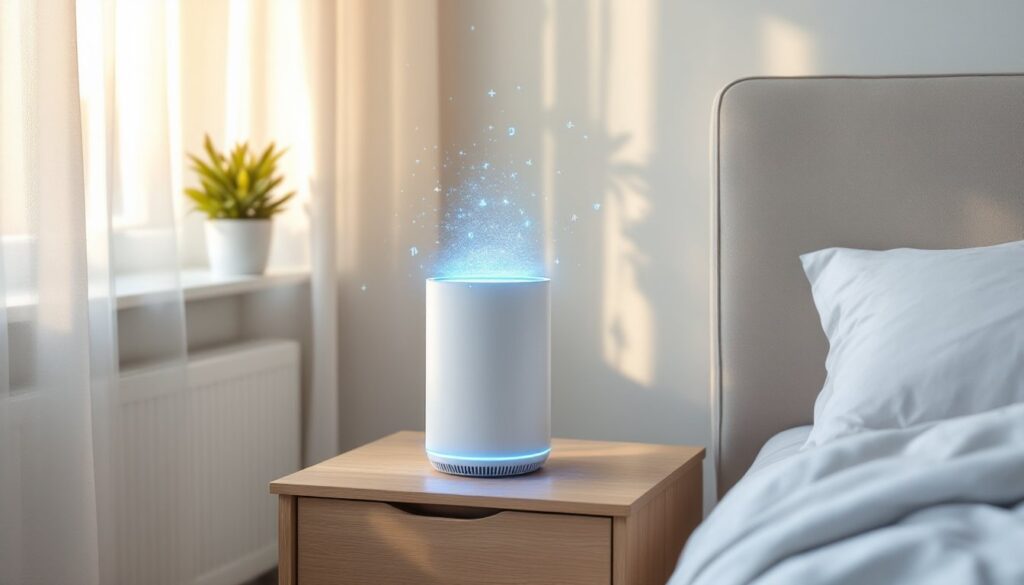

You’ve probably noticed the ionizer button on air purifiers or seen “ionic” models on store shelves. Maybe you’ve wondered what an ionizer does on an air purifier, or if it’s worth using at all. These devices work differently than traditional HEPA units, releasing electrically charged particles instead of just pulling air through a filter. That fundamental difference affects everything from what they remove to what they might release into your home. Before you flip that switch or invest in an ion air purifier, it’s worth understanding both the mechanics and the trade-offs involved.
Table of Contents
ToggleKey Takeaways
- An ionizer air purifier releases negatively charged ions that attach to airborne particles, making them heavy enough to fall out of the air or stick to surfaces rather than trapping them in a filter.
- Ionizer air purifiers operate quietly with minimal energy consumption and require no filter replacements, making them cost-effective for bedrooms, home offices, and small rooms.
- The biggest safety concern with ionic air purifiers is ozone production—look for CARB-certified models that meet EPA limits of 0.07 ppm to protect respiratory health.
- Unlike HEPA filters that trap 99.97% of particles, ionizers relocate dust and allergens to floors and furniture, requiring regular vacuuming and surface cleaning to prevent buildup.
- Hybrid models combining HEPA filters and ionizer technology offer the best solution for comprehensive air quality, handling both ultra-fine particles and larger particulates effectively.
- For wildfire smoke, heavy allergens, or allergy sufferers, HEPA purifiers are more effective; ionizers work best as supplemental devices in light-duty scenarios with diligent maintenance.
What Is an Ionizer Air Purifier and How Does It Work?
An ionizer air purifier (also called an ionic air purifier) doesn’t trap particles the traditional way. Instead, it releases negatively charged ions, molecules with an extra electron, into the air. These ions attach to airborne particles like dust, pollen, mold spores, and smoke, giving them a negative charge.
Once charged, these particles behave differently. They’re attracted to positively charged surfaces, walls, floors, furniture, or a collection plate inside the unit itself. Essentially, the ionizer makes particles heavy enough to fall out of the air you breathe or stick to nearby surfaces.
Some models combine an ionizer with a HEPA filter. Others rely solely on ionization. What is an ionizer on an air purifier in those hybrid units? It’s a supplemental feature meant to grab smaller particles that filters might miss. Standalone ionic units skip the filter entirely, which means no replacement costs but also a different kind of maintenance.
The process is quiet, there’s no fan running at high speed, and energy use is minimal. But the lack of a physical filter means particles don’t disappear: they settle somewhere in the room unless you clean them up.
Key Benefits of Using an Ionizer Air Purifier at Home
Quiet operation is the first thing most users notice. Without a motor pushing air through dense filters, an air purifier ionizer runs almost silently. That makes it a solid choice for bedrooms, home offices, or anywhere noise is a concern.
Low energy consumption is another upside. These units pull fewer watts than fan-based purifiers, which can add up if you’re running them 24/7. Expect energy use comparable to a nightlight rather than a window AC unit.
No filter replacements mean lower ongoing costs. HEPA filters need swapping every 6–12 months depending on use, and they’re not cheap. Ionizers eliminate that recurring expense, though you’ll still need to wipe down collection plates or surfaces where particles land.
Ionizers can also target very fine particles, smoke, bacteria, and even some viruses, that slip through standard filters. The ions latch onto particles as small as 0.01 microns, which is well below what most HEPA filters capture. For smoke-heavy environments or homes near wildfires, that granularity matters.
Some people report a fresher smell after running an ionizer, likely due to the breakdown of odor molecules. It’s not a substitute for proper ventilation, but it can help in musty basements or pet-heavy rooms.
Potential Drawbacks and Safety Concerns to Consider
The biggest concern with ionic air purifiers is ozone production. Some ionizers generate ozone, a molecule made of three oxygen atoms, as a byproduct of the ionization process. Ozone is a lung irritant, especially for kids, elderly folks, and anyone with asthma or respiratory issues. The EPA sets an indoor ozone limit of 0.07 ppm, and some older or poorly designed ionizers exceed that.
Not all ionizers produce ozone, and manufacturers are required to disclose emissions. Look for models certified by CARB (California Air Resources Board), which sets strict ozone limits. If the spec sheet doesn’t mention ozone or CARB certification, skip it.
Particles settle instead of being captured, which means dust and allergens end up on your floor, couch, or walls. You’re not eliminating them, you’re relocating them. If you don’t vacuum or wipe surfaces regularly, you’re just redistributing the problem.
Ionizers also struggle with larger particles like pet hair or visible dust clumps. They’re built for fine particulates, not the stuff you can see floating in a sunbeam.
Another consideration: some home technology reviewers note that ionizers alone don’t address volatile organic compounds (VOCs) from paint, cleaning products, or off-gassing furniture. For that, you need activated carbon filtration.
Finally, if you have sensitive electronics nearby, the charged particles can be attracted to screens, circuit boards, and vents. It’s not common, but worth noting if you’re placing an ionizer near a home theater setup or gaming rig.
Ionizer vs. HEPA Air Purifiers: Which One Should You Choose?
HEPA filters physically trap 99.97% of particles 0.3 microns or larger. They’re proven, reliable, and don’t produce ozone. The trade-off is noise, energy use, and the cost of replacement filters.
Ionizers are quieter and cheaper to run, but they don’t remove particles, they just make them fall. And the ozone risk is real if you choose the wrong model.
For allergy sufferers, HEPA is the safer bet. You want particles trapped, not settling on bedding or carpets where they can be stirred up again. A true HEPA unit also captures pollen and mold spores reliably.
For light-duty air freshening in a small room, say, a home office or guest bedroom, an ionizer can work fine, especially if you’re diligent about cleaning. Just don’t expect it to handle heavy dust, pet dander, or construction debris.
Hybrid models that combine HEPA and ionizer features offer the best of both worlds, though they cost more upfront. The ionizer handles ultra-fine particles, and the filter does the heavy lifting. Some homeowners find this setup works well for multipurpose air quality solutions, especially if they also need humidity control.
If noise is the deciding factor, ionizers win. If effectiveness and safety matter most, go HEPA. If you want both, budget for a combination unit and read the fine print on ozone emissions.
Best Rooms and Scenarios for Ionizer Air Purifiers
Bedrooms are a natural fit, quiet operation won’t disturb sleep, and overnight runtime helps with lingering odors or light dust. Just make sure the model is CARB-certified and produces minimal ozone.
Home offices benefit from the silent operation, especially during video calls. If you’re in a smaller room (under 200 square feet), an ionizer can keep the air feeling fresher without the white noise of a fan.
Basements and storage areas often have musty smells and stagnant air. An ionizer can help break down odor molecules, though you’ll still need to address moisture issues separately. Pair it with a dehumidifier if dampness is a factor.
Garages or workshops might seem like a good use case, but ionizers don’t handle sawdust, paint fumes, or heavy particulates well. For those environments, a shop vac with a HEPA filter or a dedicated HEPA air scrubber is a better call.
Avoid placing ionizers in kitchens or bathrooms where grease, steam, and high humidity can clog collection plates or reduce effectiveness. These rooms need ventilation and exhaust fans more than ionic purification.
If you’re dealing with wildfire smoke or heavy allergens, an ionizer alone won’t cut it. You need mechanical filtration to physically remove particles before they settle and get stirred up again.
Tips for Choosing and Maintaining Your Ionizer Air Purifier
Check for CARB certification before buying. This ensures ozone emissions stay within safe limits. It’s listed in the product specs or on the California Air Resources Board website.
Match the unit to room size. Ionizers are rated by square footage, just like HEPA units. A model rated for 150 square feet won’t do much in a 400-square-foot living room.
Look for washable collection plates. Some ionic air purifiers have metal plates that catch charged particles. If those are removable and dishwasher-safe, maintenance is straightforward. If not, you’re wiping down internal parts manually.
Clean surfaces regularly. Particles settle on floors, furniture, and walls. Vacuum at least weekly and wipe down surfaces with a damp cloth to prevent buildup. Microfiber works well for grabbing charged dust.
Turn off the ionizer if anyone has asthma or respiratory issues, especially if the unit isn’t CARB-certified. Even low ozone levels can trigger symptoms in sensitive individuals.
Avoid placing the unit near electronics or air vents. Charged particles can stick to screens and circuit boards, and placing it near a vent just blows ions away before they can do their job.
If you’re handy, many home improvement enthusiasts integrate ionizers into whole-home HVAC systems, but that’s a more advanced project. For most DIYers, a portable unit is plug-and-play.
Consider a hybrid model if you want both ionic and mechanical filtration. You’ll pay more upfront, but you won’t have to choose between quiet operation and reliable particle removal.
Conclusion
Ionizer air purifiers aren’t a one-size-fits-all solution, but they have a place in the right home. If you need quiet operation, low energy use, and don’t mind regular surface cleaning, they can work, especially in bedrooms or small offices. Just prioritize CARB-certified models to avoid ozone issues, and understand that particles settle rather than disappear. For heavy-duty air cleaning or allergy relief, stick with HEPA or consider a hybrid unit that gives you both technologies.