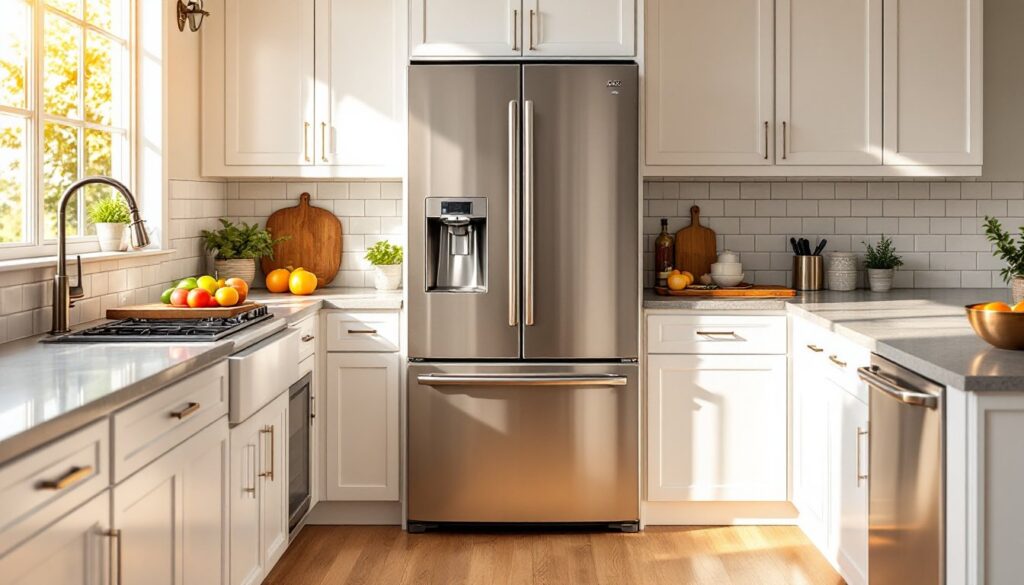

Counter depth refrigerators have become the go-to choice for modern kitchens, offering a sleek, built-in look without the custom price tag. KitchenAid’s counter depth lineup delivers on that promise with solid construction, pro-style features, and a range of configurations to fit different layouts. Whether you’re deep into a kitchen remodel or replacing a worn-out unit, choosing the right model means balancing capacity, features, and your actual cabinet dimensions. This guide walks through what sets KitchenAid apart, which features matter most, and how to pick a model that won’t leave you wrestling with door clearances or buyer’s remorse.
Key Takeaways
- A KitchenAid counter depth refrigerator sits flush with standard cabinets at 24-27 inches deep, providing a sleek built-in look and maximizing floor space compared to full-depth models.
- French door models prioritize fresh food access with wider shelves, while side-by-side refrigerators offer more freezer space and work better in narrow kitchen layouts, so choose based on your storage priorities and available width.
- KitchenAid sets itself apart with stainless steel interiors, metal-backed shelving, independent humidity controls, and ExtendFresh temperature management that prevents freezer burn and food spoilage.
- Capacity ranges from 20-23 cubic feet versus 25-30 for standard-depth units, so confirm the model handles your household’s grocery volume before purchase.
- Installation requires dedicated electrical circuits, proper water line hookup with copper or stainless tubing, at least 1 inch ventilation clearance, and careful measurement of height, width, depth, and door swing space to avoid costly misalignment.
- Models range from $2,200 entry-level to $4,500+ premium options, with mid-range KitchenAid side-by-side refrigerators offering the best price-per-cubic-foot value for budget-conscious buyers.
What Makes KitchenAid Counter Depth Refrigerators Stand Out
KitchenAid built its reputation on commercial-grade mixers, and that same build quality carries over to their refrigeration lineup. Their counter depth models sit flush with standard 24-inch-deep cabinets, typically measuring 24-27 inches deep (excluding handles), compared to the 30-36 inches you’ll find on full-depth units. That shallow profile gives you a cleaner sightline and more usable floor space in tight kitchens.
The brand offers three main configurations: French door, side-by-side, and occasionally four-door layouts. French door models dominate the lineup, pairing wide shelves up top with a pull-out freezer drawer below. The KitchenAid counter depth French door refrigerator format works well if you prioritize fresh food access and want to skip the deep-freeze dive for everyday items. Side-by-side options, like the KitchenAid counter depth side by side refrigerator, split the cabinet vertically, giving you narrow-but-tall compartments on each side. That layout fits narrower wall spaces and makes freezer items easier to spot at eye level, though you’ll sacrifice some shelf width for platters or pizza boxes.
KitchenAid differentiates itself with stainless steel interiors on select models (no plastic bins absorbing odors), ExtendFresh temperature management that uses separate sensors for each zone, and Preserva Food Care systems with dual evaporators to control humidity independently in fridge and freezer. Independent evaporators prevent freezer burn and keep greens from wilting, something you’ll notice if you’ve ever had ice cream taste like yesterday’s leftovers.
Construction details matter here. Most KitchenAid counter depth units use metal-backed shelving instead of glass-only, which holds up better under heavy loads (gallon jugs, stacked leftovers). Door bins are adjustable and often gallon-sized, and many models include under-shelf LED lighting that illuminates the entire interior instead of just the top shelf. If you’re comparing brands, check whether the crisper drawers have individual humidity controls, KitchenAid includes them on mid-tier and up, while some competitors skip it to cut costs.
Key Features to Look for in a KitchenAid Counter Depth Model
Not all counter depth refrigerators are created equal, even within the same brand. Start with capacity, most KitchenAid counter depth models range from 20 to 23 cubic feet, compared to 25-30 cubic feet for standard-depth units. You’re trading volume for footprint, so if you’re feeding a household of five or stocking up weekly, confirm the fridge can handle your grocery haul without Tetris-level packing.
Ice and water dispensers add convenience but eat into interior space. Through-the-door dispensers on a KitchenAid side by side counter depth refrigerator typically cost you 1-2 cubic feet of freezer capacity for the ice maker’s reservoir and auger. Internal dispensers (inside the fridge compartment) preserve exterior aesthetics and don’t require a bulky housing, but you’ll need to open the door for every glass of water. If you’re after a seamless panel-ready look, skip the external dispenser entirely.
Wi-Fi connectivity has become standard on higher-end models, letting you adjust temps, get filter change alerts, or check internal cameras from your phone. Useful if you’re at the store wondering whether you need milk, less so if you just want a fridge that keeps things cold. Don’t pay extra for smart features you won’t use.
Look for Produce Preserver tech on KitchenAid models, it uses a filter to absorb ethylene gas, which slows ripening and extends produce life by several days. It’s a small detail that reduces food waste, especially if you buy fresh herbs or berries in bulk.
Energy efficiency varies by model. Most KitchenAid counter depth units are ENERGY STAR certified, which translates to roughly $50-70 per year in operating costs depending on local electric rates. Inverter compressors (standard on newer models) run more quietly and cycle less frequently than older on/off compressors, reducing temperature swings and wear on components.
Storage Capacity and Interior Layout Options
Interior layout often matters more than total cubic footage. A KitchenAid French door counter depth refrigerator typically dedicates 15-16 cubic feet to fresh food and 5-7 cubic feet to the freezer. French door models excel at horizontal storage, think sheet pans, party platters, or wide casserole dishes, but the freezer drawer can feel cramped if you stock frozen bulk items or multiple ice cream flavors.
Side-by-side configurations like the KitchenAid refrigerator side-by-side split storage vertically, usually 50/50. You’ll get more freezer space than a French door model, but shelf widths max out around 12-14 inches per side. That’s fine for beverages, condiments, and boxed goods: it’s tight for a watermelon or a full turkey.
Check adjustable shelving, most KitchenAid models offer at least three positions for full-width shelves, plus slide-under or flip-up sections for tall items like pitchers or wine bottles. Gallon door bins are non-negotiable: cheaper models sometimes max out at half-gallon capacity, forcing you to store milk on the main shelf and wasting vertical space.
Freezer organization separates good layouts from frustrating ones. Pull-out drawers with dividers (standard on French door models) let you section off frozen veggies, meats, and prepared meals. Wire baskets in side-by-side freezers work, but items at the bottom turn into an archaeological dig. If you freeze a lot, prioritize models with three or more freezer zones or removable bins.
Top KitchenAid Counter Depth Refrigerator Models for Different Budgets
KitchenAid’s counter depth range spans roughly $2,200 to $4,500, with panel-ready models pushing higher. Here’s how the lineup breaks down by price tier.
Entry-level ($2,200-$2,800): The KRFC300ESS (20 cu. ft. French door) hits the sweet spot for smaller households or condo kitchens. You’ll get stainless steel finish, interior water dispenser, Preserva dual cooling, and adjustable shelves. It skips the Wi-Fi and interior cameras, but reliability is solid. The counter depth KitchenAid refrigerator in this range typically comes with a one-year parts and labor warranty plus a five-year sealed system warranty (compressor and evaporator).
Mid-range ($3,000-$3,800): The KRFC704FSS (23.8 cu. ft. French door) and KRSF505ESS (25 cu. ft. side-by-side) dominate this bracket. Both include Preserva Food Care, platinum interior with metal trim, soft-close doors, and PrintShield finish that resists fingerprints without constant buffing. The side-by-side model works well if you’re replacing an older unit in a tight alcove, as many experts note in counter-depth reviews for narrow kitchen footprints. French door fans get more fridge capacity, while side-by-side buyers gain easier freezer access.
Premium ($4,000+): The KRMF706ESS (25.8 cu. ft. French door with exterior ice/water) and panel-ready KBFN502ESS offer top-tier features: Wi-Fi connectivity, internal cameras, FreshFlow air filters, and premium LED lighting. Panel-ready models accept custom cabinet panels for a true built-in look, but you’ll need to budget an extra $300-600 for matching panels from your cabinet supplier. These units also include Automatic Ice Maker with Measured Fill, which dispenses exact amounts (4, 8, 12 oz) instead of running until you release the lever.
If you’re shopping used or open-box, stick to models from 2022 onward, KitchenAid redesigned their compressor mounts and control boards that year, improving long-term reliability. Older units (pre-2020) had occasional issues with main board failures around the 4-5 year mark, though KitchenAid extended warranties on affected serial numbers.
For budget-conscious buyers, the KitchenAid side by side refrigerator in the mid-range tier delivers better price-per-cubic-foot value than French door equivalents, though you’ll sacrifice some fresh food shelf width.
Installation Considerations for Your Kitchen Remodel
Counter depth refrigerators require more planning than drop-in ranges or dishwashers. Start by confirming your electrical setup, most KitchenAid models need a dedicated 15-amp, 120V circuit. Sharing a circuit with a microwave or garbage disposal can trip breakers during startup surges. If you’re roughing in new wiring, run a separate circuit and label it clearly in your panel.
Water line hookup (for ice makers and dispensers) needs a 1/4-inch copper or braided stainless supply line with a shut-off valve within six feet of the fridge. Plastic tubing degrades faster and is prohibited by some local codes. If you’re not comfortable soldering a tee fitting into your cold water line, hire a plumber, it’s a $100-150 job and cheaper than fixing a flood.
Leave 1 inch of clearance on each side and top for ventilation. Counter depth units vent heat through the toe kick grille at the bottom, but cramming the fridge into a too-tight alcove restricts airflow and forces the compressor to overwork. If you’re building custom cabinetry, plan for 24.5 inches of depth from the back wall to the cabinet face (assuming 24-inch-deep cabinets), which accommodates the fridge body and leaves room for wall outlets and water lines behind the unit.
Door swing matters more than you’d think. French door models need roughly 20-24 inches of clearance in front to open fully, while side-by-side doors require less swing space but more width overall. Measure your traffic flow, if your island sits 42 inches from the fridge wall, you’ll struggle with French doors when both are open simultaneously.
Delivery and haul-away: Most retailers include basic delivery but charge $50-100 for old appliance removal and an extra $100-150 for installation with water hookup. If you’re DIY-ing, recruit help, counter depth fridges weigh 250-350 pounds, and tipping one on a dolly without a second person risks back injury and dented flooring. Protect hardwood and tile with appliance sliders or cardboard: stainless steel corners gouge floors fast.
Measuring Your Space and Ensuring Proper Fit
Measure three times, order once. You’ll need height, width, and depth at multiple points, since walls and floors aren’t always square.
-
Height: Measure from floor to the bottom of your upper cabinets or soffit. Most KitchenAid counter depth models stand 68-70 inches tall. If you have 72 inches or less, check the spec sheet for exact height including hinges and feet, which can add 1-2 inches. Adjustable leveling feet give you some wiggle room, but if your ceiling or cabinet clearance is tight, you might need to notch the toe kick or trim the cabinet base.
-
Width: Measure the cabinet opening at the top, middle, and bottom. Standard KitchenAid counter depth models are 36 inches wide, but off-square walls can reduce usable width by half an inch. Budget 36.5 inches minimum to avoid a stuck fridge.
-
Depth: Measure from the back wall to the front of your cabinets (counter depth is typically 24 inches). Then measure from the wall to where you want the fridge front to sit. Handles add 1-3 inches depending on style, French door handles often protrude more than recessed side-by-side handles. If you’re after a flush look, choose a handle depth that doesn’t overhang your counters.
-
Doorway and stairwell clearance: Measure hallways, doorways, and any turns between your delivery entrance and the kitchen. Counter depth fridges are usually easier to maneuver than full-depth units, but 36-inch-wide models can still stick in 32-inch doorways, especially with door handles attached. Many manufacturers ship with handles off: install them after the fridge is in place.
If you’re replacing a built-in unit with a counter depth model, verify that the old cutout matches current standards. Kitchens built before 2000 sometimes used non-standard widths (33 or 39 inches), which may require cabinet modifications. Kitchen layout guides often highlight common measurement pitfalls when swapping appliances in older homes.
Finally, test the water dispenser line before pushing the fridge into its final position. Run a full cycle, check for leaks at the compression fittings, and confirm the shut-off valve works. Fixing a leak after the fridge is wedged in place means pulling it back out, not fun with 300 pounds of stainless steel.
Conclusion
A KitchenAid counter depth refrigerator delivers the built-in aesthetic most homeowners want without the five-figure cost of a true custom unit. Measure carefully, prioritize features that match your actual cooking habits, and don’t skip the prep work on water lines and electrical. Whether you land on a French door, side-by-side, or panel-ready model, getting the installation details right the first time saves you from costly adjustments down the road.